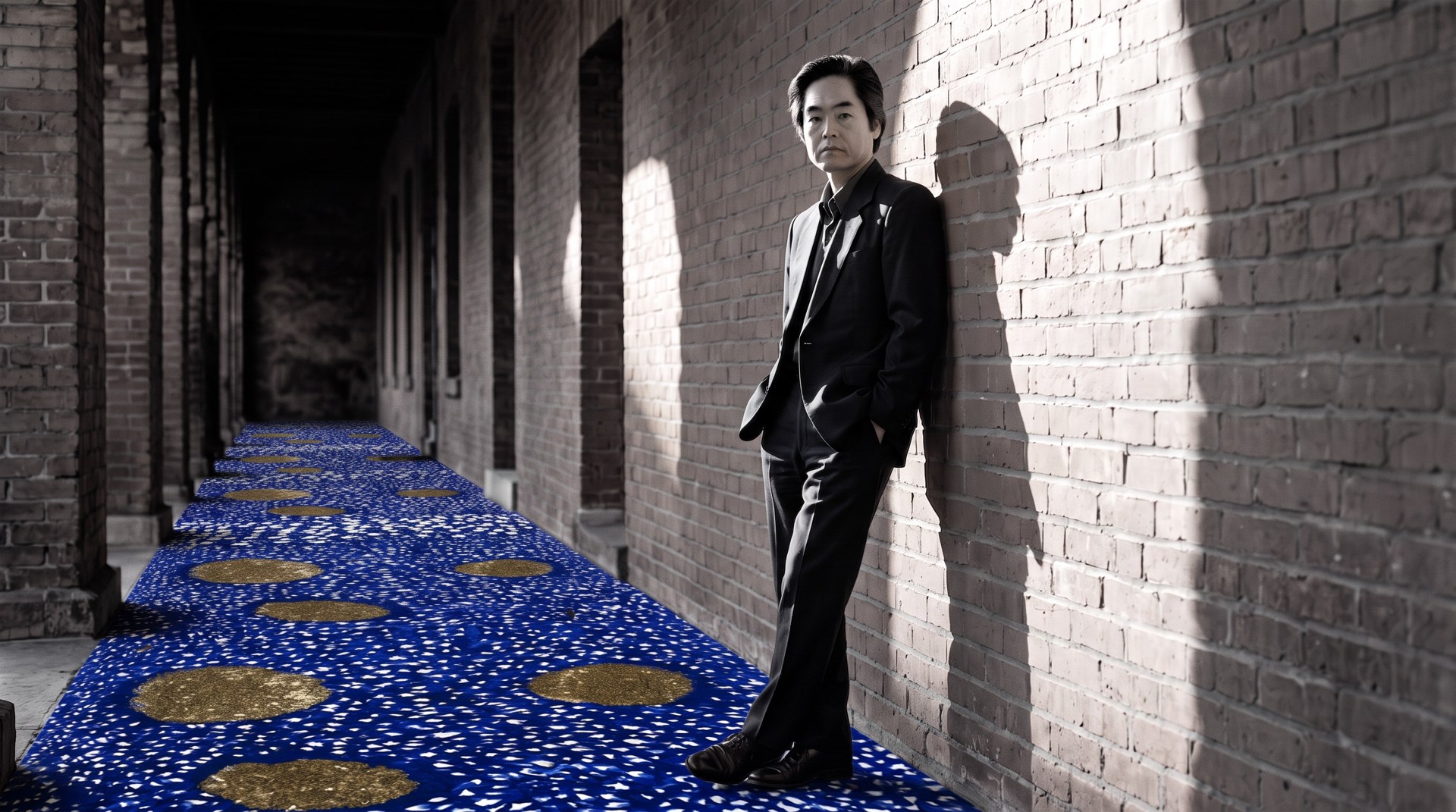
Yoichi Ohira Murano Glass: The Ultimate One-of-a-Kind Identification Guide
The Visionary Designers: A Collector's Guide
Yoichi Ohira — The Master of Mosaic Murrine
Artist Key: Yoichi Ohira
- Role: Sculptor / Independent Glass Artist / Artistic Director (The Master of Mosaic Murrine)
- Life/Dates: Tokyo, Japan, 1946 – (Lives and operates in Venice, Italy; retired from creative activity in 2010)
- Primary Furnaces/Associations: Kagami Crystal Company (Tokyo, Apprentice, 1969–1971) | Yamaya Glass Company (Chiba, Apprentice, 1971–1972) | Fucina degli Angeli (Collaborator, 1973–1978) | Vetreria de Majo (Artistic Director, 1987–1992) | Vetreria Anfora (Independent Artist, 1993–2010)
- Signature Techniques: Casting di Tessere (Glass casting/vetrofusione of polychrome plaques) | Pasta Vitrea e Canne (Opaque glass paste and parallel cane fusions) | Moleria e Velato (Cold-worked, wheel-carved matte/velvety surface finishes) | Murrine Sotto Vetro (Submerged mosaic murrine inclusions) | Polveri (Submerged metallic/pigment dust inclusions)
- Market Price Tier: Ultra-Premium Investment Grade (specifically 1993–2010 one-of-a-kind unico hand-blown vessels co-executed by Livio Serena and Giacomo Barbini, the 1990 de Majo Ashanti series, and his 2001 Rakow Commission creations) to High-End (de Majo Venezia e l'Oriente perfume bottles and standard sommerso cane vases)
- Key Collaborators: Egidio Costantini | Lucio de Majo | Vittorio Ferro | Giuliano Rioda | Italo Ballarin | Livio Serena ("Maisasio") | Giacomo Barbini | Andrea Zilio
Summary:
Discover the secrets to identifying, dating, and collecting the exquisite, feather-light glassware designed by Yoichi Ohira, the legendary father of modern Murano minimalism. This comprehensive guide explores his transition from secessionist Ca' Pesaro paintings to his appointment as the first Artistic Director of V.S.M. Cappellin Venini & C. and M.V.M. Cappellin, detailing the physics behind his iconic Veronese and Libellula dragonfly vases. Learn how to verify authentic diagnostic markers—including feather-light glass weights, smooth fire-polished pontil scars, rare M.V.M. Cappellin acid stamps, and the Seguso 9000-series pre-war crossover models—to confidently identify his creations and spot true investment-grade masterworks on the secondary market.
⏳ Visual Career Timeline
              ┌──────────────────────────────────────────────────────────┐
              │                     YOICHI OHIRA                         │
              │             - THE MASTER OF MOSAIC MURRINE -             │
              └──────────────────────────┬───────────────────────────────┘
                                         │
     ┌───────┐                           ▼
     │ 1946  │ ──► Born in Japan; graduates from Tokyo's Kuwasawa Design School in 1969.
     └───────┘                           │
     ┌───────┐                           ▼
     │1969-72│ ──► Apprentices as a blower at Kagami Crystal (Tokyo) and Yamaya Glass (Chiba).
     └───────┘                           │
     ┌───────┐                           ▼
     │ 1973  │ ──► Moves to Venice; enrolls in sculpture at Accademia di Belle Arti under Alberto Viani.
     └───────┘                           │
     │                                   ├─► Collaborates with Egidio Costantini's Fucina degli Angeli.
     │                                   └─► Designs hot-applied grapevine bottles and abstract iron-glass monoliths.
     │                                   │
     ┌───────┐                           ▼
     │ 1987  │ ──► Appointed Artistic Director at Vetreria de Majo, launching the art glass department.
     └───────┘                           │
     │                                   ├─► Creates the elegant, light-blown "Venezia e l'Oriente" bottle series.
     │                                   └─► Collaborates with master glassmakers Vittorio Ferro and Giuliano Rioda.
     │                                   │
     ┌───────┐                           ▼
     │ 1990  │ ──► Launches the \"Ashanti\" collection, his first major experience with cast glass tesserae.
     └───────┘                           │
     ┌───────┐                           ▼
     │ 1993  │ ──► Establishes independent career; partners with master blower Livio Serena (\"Maisasio\").
     └───────┘                           │
     ┌───────┐                           ▼
     │ 1995  │ ──► Master engraver Giacomo Barbini joins Ohira's team, executing cold-worked velato surfaces.
     └───────┘                           │
     ┌───────┐                           ▼
     │ 2001  │ ──► Awarded the prestigious Rakow Commission by the Corning Museum of Glass.
     └───────┘                           │
     ┌───────┐                           ▼
     │ 2004  │ ──► Maestro Andrea Zilio succeeds Serena at Anfora, blowing Ohira's cast mosaic compositions.
     └───────┘                           │
     ┌───────┐                           ▼
     │ 2010  │ ──► Formally retires from creative activity, leaving an immortal legacy of cultural hybridity.
     └───────┘
1. The Legend & Legacy: The Bridge Across the Lagoon
In the seven-century chronicle of Venetian glassmaking, Yoichi Ohira stands as a magnificent, singular anomaly: a Japanese sculptor who became one of the most technical, revered, and culturally transformative designers in the modern history of Murano. Born in Japan in 1946, Ohira graduated from Tokyo’s Kuwasawa Design School in 1969. It was during this period that he first experienced glass as a medium, prompting him to seek immediate physical mastery of the material. He spent a year and a half as an apprentice glassblower at the renowned Kagami Crystal Company in Tokyo, followed by a year at the Yamaya Glass Company in Chiba. Through these hands-on furnace sessions, Ohira arrived at a profound realization: to realize the complex, multi-layered designs forming in his mind, he needed to study under the only craftsmen in the world who possessed the necessary seven-hundred-year-old technical pedigree—the master glassmakers of Murano.
In 1973, with zero knowledge of the Italian language but carrying an unyielding determination, Ohira moved to Venice. He enrolled in the Accademia di Belle Arti di Venezia, completing formal studies in sculpture under the famous Italian modern sculptor Alberto Viani and graduating in 1978 with a seminal dissertation on the "Aesthetics of Glass". His early Venetian career was defined by conceptual sculpture, constructing towering monoliths that combined sheets of flat, industrial glass with heavy, structured iron frames. Simultaneously, he entered Egidio Costantini's Fucina degli Angeli (Forge of the Angels), acting as a designer of highly refined, light-blown transparent bottles and goblets wrapped in hot-applied, lifelike grapevines and clusters of grapes on the pipe.
The first major commercial breakthrough of Ohira’s career occurred in 1987, when he was appointed the first Artistic Director of the newly established art glass department at Vetreria de Majo. This partnership was highly historic: de Majo, which had traditionally specialized in luxury lighting fixtures, gave Ohira free rein to construct high-art collector vessels. Collaborating with master blowers Vittorio Ferro and Giuliano Rioda, Ohira developed an aesthetic that merged the clean, muted, and nature-grounded geometries of Japanese lacquerware and ceramics with the vibrant, hot-worked polychromy of Murano. His debut de Majo collection, Venezia e l'Oriente, featured thin-walled, transparent blown perfume bottles capped with elaborate, hot-applied jewel-like multi-colored stoppers that immediately caught the attention of international curators.
Following the conclusion of his tenure at de Majo in 1992, Ohira turned his attention to a career as an independent studio artist. In 1993, he formed an exclusive, equal partnership with the master glassblower Livio Serena (nicknamed "Maisasio"). Operating out of the celebrated Vetreria Anfora in Murano, Ohira designed strictly one-of-a-kind, handmade vessels (pezzo unico). In 1995, the master cold-worker and engraver Giacomo Barbini joined this elite team, specializing in cutting, grinding, and polishing the bases and outer walls to reveal the hidden depths of Ohira's cased colors.
This legendary trio Ohira’s mind, Serena's breath, and Barbini's wheel, pushed Murano glass to the absolute pinnacle of contemporary art, winning the prestigious Rakow Commission from the Corning Museum of Glass in 2001. Following Livio Serena's departure in 2004, Ohira continued his one-of-a-kind mosaic fusions with master blower Andrea Zilio at Vetreria Anfora until his formal retirement in 2010. Today, his masterpieces reside in the permanent collections of the world’s greatest museums, including the Metropolitan Museum of Art in New York, the Victoria and Albert Museum in London, and the Musée des Arts Décoratifs in Paris, recognized as the premier bridge between Eastern restraint and Western fire.
2. The Alchemy of Vetrofusione: Fused Tesserae, Pasta Vitrea, and Velato Surface Carving
Yoichi Ohira's designs are defined by an extraordinary, highly disciplined fusion of several complex hot-furnace and cold-carving techniques:
- The Physics of Glass Plate Roll-Up (Vetrofusione): The core of Ohira’s one-of-a-kind mosaic vessels is a highly complex, two-stage glass-casting process (vetrofusione). Rather than blowing a vessel from a single molten gather, Ohira and master Livio Serena began by arranging hundreds of pre-cut, colored glass canes (canne) and square mosaic tiles (tesserae) on a cold, flat iron plate. These tesserae were composed of both vibrant transparent glass and rich, opaque pasta vitrea (glass paste). Once the dry geometric mosaic was laid out with mathematical precision, the plate was inserted into a specialized casting kiln (muffola) and heated until the individual tiles fused into a single, flat, solid-glass plaque. The master blower then gathered a small bubble of hot glass on his blowpipe and rolled it across the molten plaque (rolling-up), causing the fused sheet of mosaic tiles to seamlessly wrap around the parison. This multi-patterned cylinder was then reheated, shaped, and inflated into the final vessel, maintaining razor-sharp boundaries between the individual colored squares.
- The Esthetics of Opaque Pasta Vitrea with Transparent Windows: From the mid-1990s onward, Ohira shifted his focus toward highly saturated, opaque glass pastes (pasta vitrea) in combinations of deep mustard yellow, coral red, and warm browns, evoking the textures of Japanese lacquerware and fine porcelain. However, to pay homage to the glassy, light-refracting soul of the material, he routinely inserted a single, highly deliberate, and isolated transparent window (finestre) or a thin transparent colored cane into the opaque mosaic wall. These windows allowed light to slice through the dense, lacquer-like body of the vase, creating an exquisite, internal glow that shifted as the viewer walked around the object.
- The Submerged Polveri (Glass Dust) Fusions: In several of his most celebrated series, such as Polveri (1997), Ohira worked with metallic and mineral powders. While the core parison was white-hot, it was rolled in deep salmon, pink, or ruby-red glass dust (polveri) before being cased in an outer, protective sheath of clear crystal. This created a dense, shimmering, and cloudy internal coloration that simulated the natural veins of polished hard-stones or ancient marble.
- The Cold-Worked Velato and Battuto Finishes: To eliminate the loud, distracting reflections of hot-glossy glass and achieve a soft, velvety texture, Ohira worked in close, non-verbal synergy with master engraver Giacomo Barbini. Barbini used specialized carborundum wheels in the grinding shop (moleria) to execute two highly distinct cold-worked finishes:
- Velato (Veiled): A microscopic, incredibly fine satin finish ground across the entire outer surface of the vessel, resulting in a completely non-reflective, soft-matte skin that feels like polished stone or silk in the hand.
- Battuto (Beaten): A dense pattern of irregular, shallow, and hand-carved concave depressions ground into the glass wall. On blue transparent vessels, this created a beautiful, shimmering, and wavelike surface that brilliantly mimicked the shifting water channels of Venice.
3. The Landmark One-of-a-Kind Series
Yoichi Ohira's career was defined by several historic, technically supreme one-of-a-kind (unico) design series:
- The Ashanti Series (c. 1990): Designed during his final years at de Majo, this historic collection represents Ohira's very first experiment with fused polychrome tesserae. Inspired by the geometric patterns of African textiles, the vases are composed of transparent, brilliant polychrome squares fused together and blown into smooth, classic bulbous silhouettes.
- The Polveri Series (c. 1997): Highly coveted vessels composed of parallel transparent turquoise or ruby glass canes combined with submerged red and pink mineral dust inclusions (polveri), finished on the outer skin with a microscopic, velvety velato carving.
- The Finestre Series (c. 1998): Vases composed of dense, wood-grained brown and mustard-colored opaque glass canes, punctuated by highly deliberate, isolated "windows" (finestre) of transparent turquoise-green or cobalt-blue glass, cased and finished with a polished base and a velvety velato body.
- The Metamorfosi Series (c. 1999): A spectacular, highly minimalist exercise in monochromatic contrast. The vessels are composed of parallel, paper-thin opaque white lattimo glass canes inlaid with intricate, multi-layered clear cristallo and white murrine. The surface is ground flat and finished with an immaculate velato surface, showcasing Ohira’s absolute command over subtle, nature-grounded tones.
- The Imaginary Birds (Uccelli Fantastici, c. 1991): Sculptural animal figures designed for de Majo and executed as artist proofs. Modeled from dense, opaque polychrome pasta vitrea, these birds are stylized into compact, ellipsoidal, and highly symbolic abstractions of nature, combining the heavy, sculptural material of Murano with Japanese organic minimalism.
4. Elite Collaborations: The Symmetric Trio
Unlike many historic Murano designers who remained anonymous, Ohira operated on a model of absolute, transparent, and public collaboration, openly signing his one-of-a-kind pieces with his own name alongside his master craftsmen:
- Livio Serena ("Maisasio"): As chief master blower (maestro) from 1993 to 2004, Serena was the physical medium who turned Ohira's cast mosaic plaques into flawlessly blown, paper-thin vessels. His ancestral command over traditional Venetian techniques—specifically incalmo and filigrana—complemented Ohira's Japanese geometric rigor.
- Giacomo Barbini: Joining the team in 1995, Barbini was the undisputed genius of the grinding wheel. He specialized in the delicate, highly dangerous task of carving and grinding the thin-walled cased vessels after they had cooled, executing the velvety velato and wavelike battuto skins that defined Ohira's tactile style.
- Vittorio Ferro & Giuliano Rioda: During his 1987–1992 tenure at de Majo, these two legendary masters from elite Muranese dynasties were the primary gaffers who physically blew Ohira's early transparent collections and the landmark Ashanti series.
5. The Collector's Diagnostic Checklist & Market Realities
- Evaluating the Velato Matte Skin: In authentic, late-period Ohira unico vessels, the matte velato finish must be exceedingly uniform, soft, and velvety to the touch. It must show absolutely zero scratches, uneven glossy patches, or coarse grinding lines under a magnifying glass.
- Analyzing Tesserae Boundaries & Fusion Lines: On Ohira’s mosaic vessels, the boundaries between the opaque pasta vitrea tiles and transparent canes must be razor-sharp, perfectly parallel, and structurally seamless. There should be zero color bleeding, internal stress fractures, or trapped air bubbles at the joins of the fused plaques.
- The Weight-to-Casing Ratio: Despite their heavy visual appearance, Ohira’s cased vessels are remarkably well-balanced and light, showing the hand of master blowers like Serena and Zilio. The inner white lattimo or opaque paste layers must be uniform in thickness from the rim down to the flat base.
- The Price Tiers:
- Ultra-Premium Investment Grade: One-of-a-kind (1/1 unico) vessels designed by Ohira, executed by Livio Serena, and carved by Giacomo Barbini between 1993 and 2004, carrying full tripartite base engravings.
- Mid-Range: Original 1990 de Majo Ashanti fused-tesserae vases and early Venezia e l'Oriente blown perfume bottles with elaborate multi-colored stoppers.
- Accessible: Miniature transparent cups, small plates, and tableware produced during his early de Majo tenure in the late 1980s.
6. Forensic Chronology of Base Engravings & Signatures
To confidently identify, date, and authenticate a Yoichi Ohira vessel, collectors must inspect the base for his highly distinct, hand-guided engraved cursive signatures:
I. The Vetreria de Majo Era (1987–1992)
- The Factory Engraving: Pieces executed during his tenure as Artistic Director typically carry a simple, hand-guided cursive engraving reading:
Yoichi Ohira de MajoorYoichi Ohira per de Majosometimes accompanied by the year of execution. - The Paper Decals: Wares originally carried a rectangular paper showroom sticker reading
de Majo / Muranoprinted in black ink.
II. The Independent Studio Era (1993–2010)
This represents his absolute highest-value, investment-grade period. Wares are always hand-signed, dated, and explicitly numbered on the meticulously ground base ring using a hand-guided diamond-point drill. They follow a highly rigid, tripartite cryptographic formula:
- The Tripartite Signature Structure: Authentic, one-of-a-kind independent creations are engraved with:
- The designer's full name:
Yoichi Ohira - The master blower's abbreviation:
m. L. Serena(orm. L. Serena Murano) for Livio Serena, orm. A. Zilio(for Andrea Zilio, post-2004). - The unique collection numbering:
1/1 unico(verifying its status as a unique, one-of-a-kind artistic masterpiece). - The exact calendar date of execution and location: (e.g.,
4.11.1997 Muranoor1999 Murano).
- The designer's full name:
- The Final Base Markings Example: A typical base ring of his golden-era independent vessels reads:
Yoichi Ohira m. L. Serena 1/1 unico 20.11.1997 MuranoIf any piece claims to be a Yoichi Ohira one-of-a-kind vessel from this golden era but lacks the master glassblower’s co-signature (like Serena or Zilio) or is signed with a vibrating, jagged electric-pen engraving, it is a dangerous tourist-factory counterfeit.
7. Attribution & Authenticity
In the Murano glassmaking tradition, the difference between a fake and a copy rests entirely on intent, origin, and transparent attribution. A fake is a deceptive counterfeit manufactured outside of Murano—often in mass production factories in Asia or Eastern Europe—that utilizes cheap materials and carries forged signatures or illicit trademark stickers to intentionally defraud collectors. Conversely, a copy is a legitimate artistic homage (omaggio) handcrafted by a skilled master using authentic Murano techniques and materials; it serves as a tribute to honor a legendary artisan's legacy and is openly signed by the modern creator, preserving the lineage of Venetian glassblowing rather than exploiting it.
Join Our Facebook Group Identify Your Murano - Murano Glass Animals