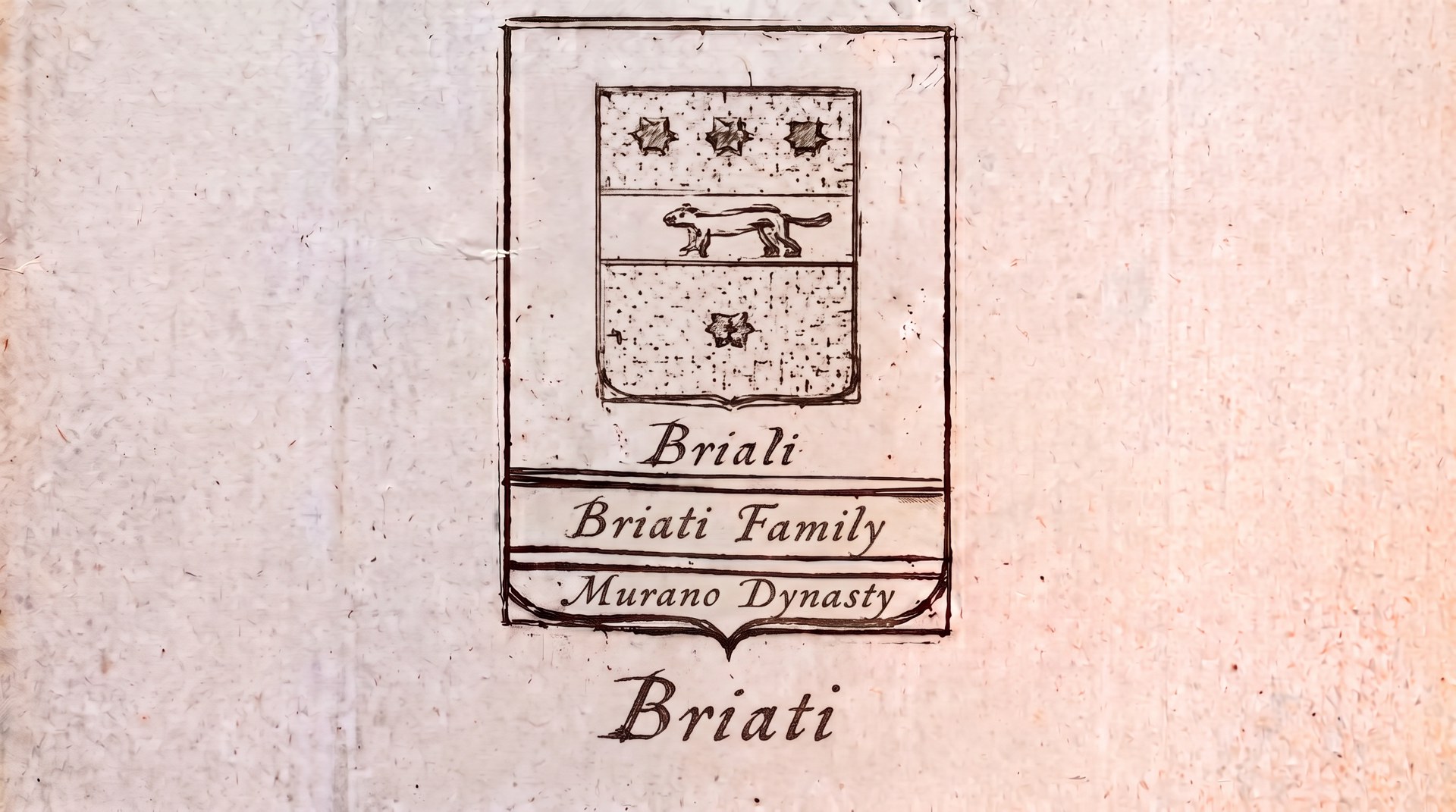
The Briati Family Murano Dynasty: Giuseppe Briati, Potash Crystal & The Ciocca Chandelier
The Briati Dynasty — 18th-Century Savior of Murano, Potash Crystal Innovation, the Dorsoduro Privilege, Libro d'Oro Nobility, and the Creation of the Ciocca Chandelier
Dynasty Key: The Briati Dynasty
- Active Dynasty Window: 1712 – Late 18th Century (documented across the 18th century from the Briati aunts' 1712 small-glass kiln to Giuseppe Briati's undercover Bohemian espionage, his 1737 Council of Ten privilege, the 1739 Dorsoduro furnace relocation, his 1762 succession to Giacomo Giandolin, and the family's official enrollment in the Libro d'Oro)
- Ancestral Seat & Primary Kilns / Studios: Briati Furnace (Murano, 1712–1739) | Dorsoduro Glassworks (San Basegio / Carmini district, Venice, 1739–1772) | Fondamenta dei Vetrai
- Hereditary Master Glassmakers, Directors & Innovators:
- 18th-Century Progenitors: Antonio Briati (d. 1701, early Muranese glassmaker) | The Briati Aunts (operated a small furnace in 1712 producing glass animals and trinkets)
- The Master & Savior of Murano: Giuseppe Briati (1686–1772, supreme master glassmaker, inventor of Venetian potash crystal, creator of the ciocca chandelier and deser centerpiece; granted 10-year exclusive privilege in 1737 and Dorsoduro relocation in 1739)
- Giandolin-Briati Successors & Scholars: Giacomo Giandolin (Giuseppe Briati's nephew who assumed direct management of the Dorsoduro furnace in 1762) | Antonio Giandolin (ecclesiastic scholar and technical translator for the furnace) | Vincenzo Briati (18th-c. furnace continuation)
- Libro d'Oro Inscribed Lineage: Lorenzo Briati & Agostin Briati (Fratelli Briati, officially inscribed in the Libro d'Oro) | Francesco Briati (civic deputy / Diputao in Murano municipal registers)
- Signature Technical & Material Inventions: Venetian Potash Crystal (Cristallo Potassico, 1730s heavy, light-refracting crystal formulated to defeat Bohemian market dominance) | The Ciocca Chandelier (Lampadario alla Briati, multi-tiered 18th-century crystal lighting with hand-blown flowers, leaves, and scrolls on concealed iron framing) | The Deser (Desre, modular table centerpieces with glass balustrades, mirrors, and miniature architectures) | Enameled Opaline & Girasole Glass
- Market Price Tier: Premier Museum & Archival Investment Grade (Original 18th-century Giuseppe Briati ciocca chandeliers, deseri centerpieces, and enameled opaline vessels hold premier museum and royal collection provenance)
- Key Collaborators & Institutions: Venetian Senate & Council of Ten (Consiglio dei Dieci) | Doge Alvise Pisani | Murano Glass Museum (Museo del Vetro) | Ca' Rezzonico Museum of 18th-Century Venice | Libro d'Oro di Murano
Summary:
Uncover the historic legacy of The Briati Dynasty, Murano's 18th-century savior. This comprehensive guide explores Giuseppe Briati's Bohemian industrial espionage, his 1737 Council of Ten privilege, the historic 1739 Dorsoduro furnace relocation, his family's official enrollment in the Libro d'Oro di Murano, and his world-famous inventions: the multi-tiered ciocca chandelier and the modular deser table centerpiece. Includes forensic identification for 18th-century Briati chandeliers and glass centerpieces.
Genealogical Lineage Map
┌─────────────────────────────────────────────────────────────────────────────────────────────┐
│                                    THE BRIATI DYNASTY                                       │
│                    - ANCESTRY & GENEALOGICAL DESCENT (1700s – 1800s) -                      │
└──────────────────────────────────────────────┬──────────────────────────────────────────────┘
                                               │
                                         Antonio Briati
                                           (d. 1701)
                                               │
                     ┌─────────────────────────┴─────────────────────────┐
                     │                                                   │
             The Briati Aunts                                     Giuseppe Briati
         (1712 Small-Glass Kiln)                                (1686–1772, Savior)
         [Pioneered Vetri a Lume]                               [Potash Crystal Creator]
                                                                [Ciocca Chandelier Founder]
                                                                [Dorsoduro Furnace 1739]
                                                                         │
                     ┌───────────────────────────────────────────────────┼──────────────────────────────────┐
                     │                                                   │                                  │
              Giacomo Giandolin                                   Antonio Giandolin                  Vincenzo Briati
          (Nephew & Furnace Director, 1762)                   (Ecclesiastic Scholar & Translator)      (18th-c. Successor)
                                                                         │
                                                       ┌─────────────────┴─────────────────┐
                                                       │                                   │
                                            Lorenzo & Agostin Briati                Francesco Briati
                                           [*Fratelli Briati* - Libro d'Oro]       [Civic Deputy / *Diputao*]
Walkthrough of the Family Tree: How the Branches Connect & Where Lineages Split
The Briati Dynasty occupies an unrivaled position in 18th-century Venetian glass history. During a period of catastrophic economic depression—when foreign Bohemian and English potash crystal dominated European markets—Giuseppe Briati single-handedly turned the tide, inventing Venetian potash crystal, introducing the multi-tiered ciocca chandelier, establishing a legendary furnace in the Dorsoduro district of Venice, and securing the family's nobility in the Libro d'Oro di Murano:
1. Branch 1: Antonio Briati & The 1712 Aunts' Kiln
- Antonio Briati (d. 1701): The documented head of the family line on Murano in the late 17th century, providing the foundation for his children and sisters.
- The Briati Aunts (1712): In 1712, Giuseppe Briati's paternal aunts operated a small independent furnace on Murano, producing whimsical miniature glass animals, figures, and trinkets (vetri a lume / minuterie). This workshop nurtured the young Giuseppe's passion for glass chemistry and hot-sculpting.
2. Branch 2: Giuseppe Briati & The Bohemian Industrial Espionage
- Giuseppe Briati (1686–1772): Recognized universally as the greatest Venetian glassmaker of the 18th century.
- Bohemian Industrial Espionage: Troubled by the decline of Murano's thin-blown cristallo against heavy, brilliant Bohemian wheel-engraved crystal, Briati traveled secretly to Bohemia in the late 1720s. Posing as a simple furnace laborer, he learned the exact batch chemistry of potassium-based glass (cristallo potassico).
- Formulating Venetian Potash Crystal: Upon returning to Murano, Briati synthesized a new potash crystal formula that matched the brilliance and thickness of Bohemian glass while retaining the unmatched plasticity of Muranese hot-working.
3. Branch 3: The 1737 Senate Privilege & 1739 Dorsoduro Relocation
- The 10-Year Exclusive Privilege (1737): In 1737, the Venetian Senate and the Council of Ten granted Giuseppe Briati a 10-year exclusive patent and monopoly for producing potash crystal and enameled glassware across the Venetian Republic.
- Escaping Muranese Hostility (1739): Briati's overwhelming commercial success and secret formulas provoked intense jealousy and threats of violence from rival Muranese furnace owners. In 1739, the Council of Ten granted Briati unprecedented legal permission to move his furnace off Murano into the Dorsoduro district of Venice proper (near San Basegio and the Carmini church).
4. Branch 4: The Giandolin Succession & The Libro d'Oro Civic Nobility
- Giacomo Giandolin & The 1762 Directorship: In 1762, following his second marriage, Giuseppe Briati handed over direct operational management of the Dorsoduro glassworks to his capable nephew, Giacomo Giandolin, who preserved the high manufacturing standards and secrecy of the potash crystal melts.
- Antonio Giandolin's Technical Translations: Working alongside Giacomo, Antonio Giandolin—an ecclesiastic scholar and relative—translated and authored specialized technical texts on glass chemistry, ensuring the furnace maintained its cutting-edge metallurgical advantage.
- Inscription in the Libro d'Oro di Murano: The Briati family's vast contribution to Murano's economic survival earned them formal patrician recognition. As recorded in Abbot Vincenzo Zanetti's 1883 edition of Il Libro d'Oro di Murano (p. 41 & p. 90), the brothers Lorenzo Briati and Agostin Briati (Fratelli Briati) were officially inscribed in the municipal Golden Book by Senate decree, while Francesco Briati served as an official civic deputy (Diputao).
5. Branch 5: The Ciocca Chandelier & The Deser Table Centerpiece
- Invention of the Ciocca Chandelier: At his Dorsoduro glassworks, Briati created the iconic Venetian multi-tiered crystal chandelier (ciocca, meaning bouquet of flowers). Featuring hand-blown crystal branches, leaves, scrolls, and vibrant polychrome glass flowers mounted on a concealed central iron armature, the lampadario alla Briati illuminated the grandest palazzi along the Grand Canal.
- Invention of the Deser Centerpiece: Briati also invented the deser (desre), an elaborate, modular glass table centerpiece mimicking Italian gardens, balustrades, mirrors, and architectural arcades, designed to impress royal guests at Grand Tour banquets.
1. The 18th-Century Savior of Murano: Giuseppe Briati & Potash Crystal (1720s–1730s)
The Crisis of the 18th Century
By the early 1700s, Murano faced near-total economic collapse. European courts favoured thick, heavy Bohemian and English lead-potash glass that could be deeply wheel-engraved. Venetian nobles themselves began importing foreign glass, leaving hundreds of Muranese maestri unemployed.
The Potash Crystal Breakthrough
Giuseppe Briati realized that Murano's traditional soda-lime cristallo (purified with plant ash) was too thin for heavy cutting and lacked the refractive index of Bohemian glass. By introducing potassium salts (rotti di Boemia cullet and potash fluxes), Briati engineered Venetian Potash Crystal (Cristallo Potassico), combining high optical brilliance with the fluid, light-blown plasticity required for complex hand-sculpted chandeliers.
2. The Ciocca Chandelier & The Architectural Deser
The Anatomy of the Ciocca Chandelier
The ciocca chandelier represented a revolutionary leap in lighting design:
- Concealed Iron Framework: A central vertical iron rod supported curved metal branches.
- Modular Crystal Sleeves (Bossette): Hand-blown clear glass sleeves were threaded over the metal arms, completely concealing the iron core.
- Polychrome Floral Ornamentation: Hand-sculpted glass leaves, rosettes, and polychrome flowers (fiori e foglie) were attached to each arm, terminating in delicate glass cups (scodellini) and hanging crystal drops (gocce).
The Deser Centerpiece
Constructed as modular sets (elementi componibili), Briati's deseri featured mirrored glass platforms bordered by hand-blown balustrades, miniature fountains, obelisks, and flower vases, transforming dining tables into architectural gardens.
3. Technical & Material Innovations: Batch Chemistry & Surface Form
| Technical Innovation | Italian Name | Physical Description & Furnace Chemistry | Historical Era & Primary Innovator |
|---|---|---|---|
| Venetian Potash Crystal | Cristallo Potassico | Heavy, brilliant, light-refracting crystal batch formulated with potassium salts to counteract Bohemian competition. | Formulated 1730s by Giuseppe Briati. |
| Multi-Tiered Floral Chandelier | Ciocca / Lampadario alla Briati | Multi-arm architectural chandelier featuring glass-sheathed metal arms and blown polychrome glass flowers. | Invented 1739 at Briati's Dorsoduro furnace. |
| Modular Architectural Centerpiece | Deser / Desre | Complex modular glass table centerpiece featuring mirrored platforms, arcades, and miniature fountains. | Invented 1740s by Giuseppe Briati. |
| Opaline Girasole Glass | Girasole / Opalino | Translucent opal-blue glass with reddish-amber light transmission, decorated with enamels. | Refined 1750s by Giuseppe Briati. |
4. Forensic Master Registry: Explicit Mapping of Markings, Signatures & Decals to the Genealogical Lineage Tree
Cross-referencing historical privileges, museum inventories, and physical construction traits directly against the Genealogical Lineage Map is essential for authenticating 18th-century Briati glass:
I. Archival Manuscripts & Official Privileges
-
Privilegio Decennale del Consiglio dei Dieci(1737 Senate Decree)- Physical Medium & Material: Paper patent document sealed with the lead bolla of the Council of Ten.
- Exact Printed Text:
Privilegio per la fabbricazione del Cristallo Potassico a Giuseppe Briati - 1737. - Exact Lineage Tree Mapping: Branch 2 Master & Savior → Giuseppe Briati (1686–1772).
- Curatorial Context: Primary legal monopoly granting 10 years of exclusive potash crystal production across Venetian territory.
- Exact Source Text from Notebook:
"Then the genius glassmaker, Giuseppe Briati, intervened with the invention of a potash crystal which was more brilliant than the traditional Venetian one and which, at least within the Republic, managed to counteract the Bohemian competition."
-
Furnace Permit - Dorsoduro District(1739 Relocation Decree)- Physical Medium & Material: Official decree of the Council of Ten registered in Venetian municipal archives.
- Exact Archival Title: Trasferimento della Fornace Briati da Murano a Dorsoduro (San Basegio) - 1739.
- Exact Lineage Tree Mapping: Branch 2 Master & Savior → Giuseppe Briati.
- Curatorial Context: Historic permit granting Briati the unique right to operate a glass furnace inside Venice proper.
- Exact Source Text from Notebook:
"Giuseppe Briati (1686–1772) was granted special permission in March 1739 by the Council of Ten to move his glass furnace from Murano into Venice itself to escape the resentment and reprisals of other glassmakers resulting from his monopoly and successes."
-
Libro d'Oro di Murano Inscriptions(Official Municipal Registry)- Physical Medium & Material: Official municipal registry of civic nobility (Libro d'Oro di Murano), preserved in the Venice State Archives.
- Exact Inscribed Text:
Briati (Fratelli Lorenzo e Agostin)&Briati Francesco (Diputao). - Exact Lineage Tree Mapping: Branch 4 Libro d'Oro Lineage → Fratelli Lorenzo & Agostin Briati | Francesco Briati.
- Curatorial Context: Official civic registration proving the Briati family's patrician status and municipal leadership in Murano.
- Exact Source Text from Notebook:
"Briati (The Brothers Lorenzo and Agostin) enrolled in the Golden Book of Murano; Briati Francesco recorded as Civic Deputy (Diputao)."
II. Physical & Material Diagnostic Markers
-
18th-Century Original Ciocca Chandelier (
Lampadario alla Briati)- Physical Characteristics: Multi-arm clear potash crystal chandelier with hand-blown floral sleeves (bossette), pincered leaves, and polychrome rosettes over a central iron rod; preserved in Ca' Rezzonico and Murano Glass Museum.
- Exact Lineage Tree Mapping: Branch 2 Master & Savior → Giuseppe Briati (Dorsoduro Kiln, c. 1740–1770).
- Curatorial Context: Benchmark specimen for 18th-century Venetian lighting architecture.
- Exact Source Text from Notebook:
"'Ciocca' or chandelier in blown crystal with multicolored glass decorations. Invented by the Muranese glassmaker Giuseppe Briati to light the interiors of refined 18th-century Venetian palaces..."
-
18th-Century Modular Deser Table Centerpiece
- Physical Characteristics: Interlocking mirrored glass trays framed by hand-blown balustrades, crystal urns, miniature obelisks, and glass flower garlands.
- Exact Lineage Tree Mapping: Branch 2 Master & Savior → Giuseppe Briati.
- Curatorial Context: Executed for patrician banquets; key specimens in the Museo Correr and European royal collections.
- Exact Source Text from Notebook:
"He created new forms like the 'ciocca', that is the typical multi-arm chandelier decorated with multicolored flowers, and the 'deser', a sumptuous multi-component table centerpiece."
-
Enameled Girasole & Opaline Miniature Portrait of Giuseppe Briati
- Physical Characteristics: Delicate opaline glass plate and mirror frame holding an 18th-century miniature enamel portrait of Giuseppe Briati.
- Exact Lineage Tree Mapping: Branch 2 Master & Savior → Giuseppe Briati.
- Curatorial Context: Historic souvenir portrait preserved in Stanza II of the Murano Glass Museum.
- Exact Source Text from Notebook:
"Above the cabinet: A miniature portrait in enamel representing the celebrated glass manufacturer Giuseppe Briati, dating from the 18th century, set within a small mirror framed by delicate glass rods and mirrors."
5. Attribution & Authenticity
Authenticating 18th-century Briati glass requires technical discernment:
- Chandelier Armature Inspection: Genuine 18th-century Briati ciocche feature hand-forged square-section iron armatures concealed inside hand-blown glass sleeves (bossette). Modern 19th and 20th-century reproductions often use round brass or modern steel tubing.
- Potash Crystal Refraction: Authentic Briati potash glass exhibits exceptional clarity compared to 17th-century manganate cristallo, with a warm, slightly straw-colored (pagliesco) or topaz undertone under natural light.
- Hand-Pincered Floral Details: Flowers and leaves on Briati chandeliers are individual hand-pincered hot-glass creations (lavorato a mano libero), displaying slight organic variations in petal length and thickness.
Join Our Facebook Group Identify Your Murano - Murano Glass Animals