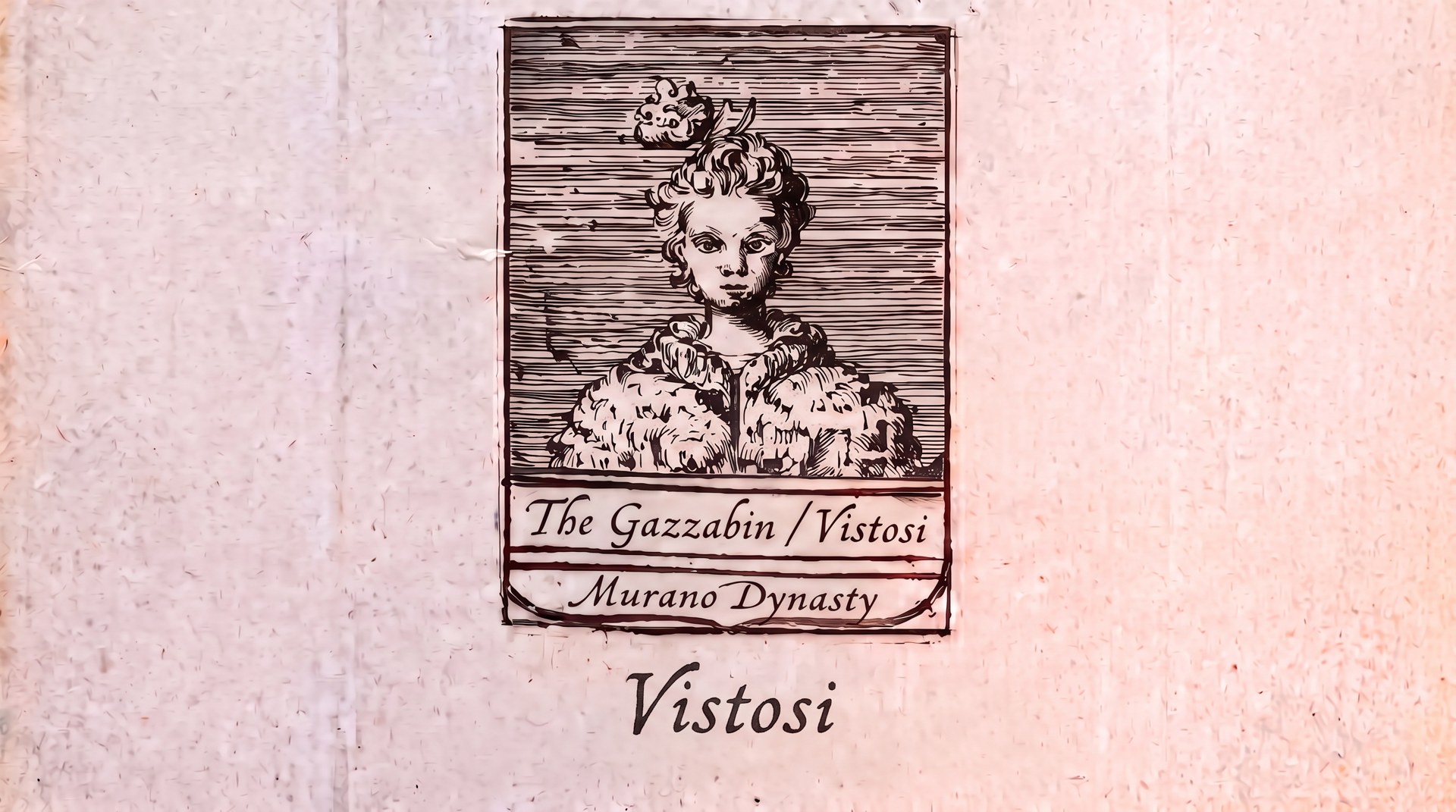
The Vistosi Family Murano Dynasty — 17th-Century Gazzabin Roots, Filigree Revivals, Post-War Sculptural Avant-Garde, and Architectural Lighting Supremacy
The Vistosi Family Murano Dynasty — 17th-Century Gazzabin Roots, Filigree Revivals, Post-War Sculptural Avant-Garde, and Architectural Lighting Supremacy
Dynasty Key: The Vistosi Dynasty
- Active Dynasty Window: 1585 – Present (documented across four centuries from 1585 Vincenzo Gazzabin Guild records and the 1690 emergence of the 'Vistosi' moniker at the Al Bastian furnace to Domenico Vistosi's 1830s filigree revival, Guglielmo Vistosi's 1945 furnace founding, and Luciano Vistosi's landmark 20th-century glass sculptures)
- Ancestral Seat & Primary Kilns / Studios: San Bastian Glassworks (Murano, 1640s) | Girolamo Vistosi Cane & Enamel Workshop (1830s) | Vetreria Vistosi (Calle San Cipriano / Fondamenta Vetrai, Murano, 1945–1985) | Galleria Alfieri & Ca' Pesaro Exhibitions | Vistosi Lighting Atelier
- Hereditary Master Glassmakers, Directors & Sculptors: Vincenzo Gazzabin (1585 Guild record) | Giovanni 'Zuane' Gazzabin (1640s Al Bastian furnace master) | Gio-Batta Vistosi (1791 Gastaldo dell'Arte) | Girolamo Vistosi (early 19th-century cane/enamel workshop owner) | Domenico Vistosi (1830s filigree revivalist & father-in-law to Domenico Bussolin) | Guglielmo Vistosi (1901–1952, founder of Vetreria Vistosi in 1945) | Oreste Vistosi (1917–1982, commercial director & designer) | Gino Vistosi (1925–1980, artistic director, designer of Corteccia & light curtains) | Luciano Vistosi (1931–2010, chemist, master sculptor, pioneer of solid crystal & scaffold-blown monumental glass)
- Signature Technical & Material Inventions: Re-discovery of Retortoli / Zanfirico Filigree (1830s with Domenico Bussolin) | Pulcini Whimsical Birds on Metal Legs (1961–1962 with Alessandro Pianon & Peter Pelzel) | Giogali Interlocking Glass Ring Lighting System (1967 with Angelo Mangiarotti) | Corteccia Bark-Textured Art Glass (1966 Venice Biennale) | Tempi Plurimi & Mondi Sommersi Solid Crystal Sculptures (1968) | Scaffold-Blown Real-Time Monumental Sculptures
- Market Price Tier: High-End Investment Grade (Luciano Vistosi original crystal sculptures and 1960s Alessandro Pianon Pulcini birds command top international auction prices ranging from $10,000 to $50,000+; mid-century Gino Vistosi and Peter Pelzel art glass vessels command Premier Investment prices; Vistosi architectural lighting fixtures range from Mid-Range to High-End)
- Key Collaborators: Domenico Bussolin | Giancarlo Moretti (1989 Acquisition) | Alfredo Barbini | Alessandro Pianon | Peter Pelzel | Fulvio Bianconi | Angelo Mangiarotti | Enrico Capuzzo | Mario Abis | Gae Aulenti | Vico Magistretti | Ettore Sottsass Jr. | Eleonore Peduzzi Riva | Fred Wilson | Maurizio Albarelli
Summary:
Discover the historical brilliance and avant-garde triumphs of The Vistosi Dynasty, Murano's premier family of filigree revivalists, modernist designers, and monumental glass sculptors. This comprehensive collector's guide details 17th-century San Bastian furnace roots, Domenico Vistosi and Domenico Bussolin's 1830s recovery of zanfirico filigree, Guglielmo Vistosi's 1945 founding of Vetreria Vistosi, Gino Vistosi's Corteccia series, Alessandro Pianon's legendary 1961 "Pulcini" glass birds on metal legs, Angelo Mangiarotti's 1967 "Giogali" modular ring lighting system, Luciano Vistosi's ground crystal monoliths (Mondi sommersi) and scaffold-blown sculptures, and forensic identification for signatures, decals, and Export Rooster Code AU. Learn how to evaluate diagnostic pontil marks, metal wire legs, and factory decals to collect Vistosi glass with absolute curatorial confidence.
Genealogical Lineage Map
┌─────────────────────────────────────────────────────────────────────────────────────────────┐
│                                    THE VISTOSI DYNASTY                                      │
│                    - ANCESTRY & GENEALOGICAL DESCENT (17th c. – PRESENT) -                  │
└──────────────────────────────────────────────┬──────────────────────────────────────────────┘
                                               │
                                  Giovanni 'Zuane' Gazzabin
                                (San Bastian Furnace, 1640–1663)
                                               │
═══════════════════════════════════════════════╪═══════════════════════════════════════════════
                                               │
                                        Girolamo Vistosi
                                 (Early 19th-c. Cane & Enamel Master)
                                               │
                                        Domenico Vistosi
                                  (1830s Filigree Revivalist)
                                (Father-in-Law to Domenico Bussolin)
                                               │
                                       Guglielmo Vistosi
                                (1901–1952, Vetreria Vistosi Founder 1945)
                                               │
                   ┌───────────────────────────┴───────────────────────────┐
                   │                                                       │
            Oreste Vistosi                                         Guglielmo's Sons
         (1917–1982, Director)                                             │
         [Commercial Leadership]                       ┌───────────────────┴───────────────────┐
                                                       │                                       │
                                                  Gino Vistosi                           Luciano Vistosi
                                              (1925–1980, Art Dir.)                   (1931–2010, Sculptor)
                                            [Corteccia & Pulcini Line]              [Crystal Sculptures & Scaffold]
Walkthrough of the Family Tree: How the Branches Connect & Where Lineages Split
The Vistosi Dynasty represents one of Murano's most remarkable evolutionary arcs: originating as 17th-century guild blowers, serving as 19th-century catalysts for the Venetian filigree revival, and ultimately transforming in the mid-20th century into an avant-garde powerhouse of international design and monumental crystal sculpture:
1. Branch 1: The Guild Ancestors & 19th-Century Filigree Revivalists
- 1585 Guild Records & 1690 Name Origin: The ancestral line is first documented in 1585 when Vincenzo Gazzabin appears in the Murano glass art registers. In the 1640s, Giovanni (Zuane) Gazzabin operated the historic Al Bastian / San Bastian glassworks on Murano. In 1690, the inherited family moniker "Vistosi" first emerged in official lagoon records, adopted by heirs to the Gazzabin furnace.
- 1791 Gastaldo dell'Arte: Reaffirming their preeminence in the Guild, Gio-Batta Vistosi was appointed Gastaldo dell'Arte (Head of the Murano Glassmakers' Guild) in 1791, immediately prior to the fall of the Venetian Republic.
- The 1830s Filigree Breakthrough: In the early 19th century, Girolamo Vistosi operated an influential Murano atelier producing colored glass canes and enamels. In 1835, Girolamo bequeathed his workshop to his son-in-law Domenico Bussolin, a bead manufacturer who married Girolamo's daughter. Working alongside Domenico Vistosi, Bussolin re-discovered the lost Renaissance technique of filigrana a retortoli (zanfirico), winning the 1842 silver medal from the Istituto Veneto di Scienze, Lettere ed Arti and sparking Murano's 19th-century glass renaissance.
2. Branch 2: The 1945 Furnace Founding & Post-War Industrial Expansion
- Guglielmo Vistosi (1901–1952): In 1945, Guglielmo Vistosi established Vetreria Vistosi on Murano. Initially dedicated to high-grade industrial and architectural lighting components, the furnace quickly attracted premier talent, briefly bringing master sculptor Alfredo Barbini into company ownership in 1947 before Barbini co-founded Gino Cenedese & C.
- The Triumvirate Direction (1952–1980): Following Guglielmo's premature death in 1952, direction passed to his brother Oreste Vistosi (1917–1982) (commercial director) and Guglielmo's two visionary sons, Gino Vistosi (1925–1980) and Luciano Vistosi (1931–2010).
3. Branch 3: The Design Revolution & Luciano Vistosi's Monumental Sculptures
- Gino Vistosi & Freelance Design Alliances: As artistic director, Gino Vistosi transformed the furnace catalog by hiring avant-garde designers. Early artistic direction by Alessandro Pianon (1931–1984) birthed the iconic "Pulcini" bird series (1961–1962). Subsequent collaborations with Peter Pelzel, Angelo Mangiarotti (Giogali system, 1967), Enrico Capuzzo, Gae Aulenti, Vico Magistretti, and Ettore Sottsass Jr. established Vistosi as a world leader in modern lighting and art glass.
- Luciano Vistosi (1931–2010): Abandoning chemistry studies at Padua University in 1952, Luciano managed technical production while pioneering free-form glass sculpture. He developed solid crystal cutting methods (Mondi sommersi, Tempi plurimi) and invented the scaffold-blowing technique for real-time hot-glass modeling. Luciano represented Italy at numerous Venice Biennales (1964, 1968, 1986) and held landmark exhibitions at Ca' Pesaro (1980, 1982).
1. The 19th-Century Catalyst: Domenico Vistosi, Domenico Bussolin & The Filigree Renaissance (1830s–1840s)
The historical foundation of the Vistosi dynasty is inextricably linked with the rebirth of Venetian glassmaking following the tragic post-1797 decline:
Girolamo Vistosi & The Enamel Atelier
- Early Kiln Operations: In the early decades of the 19th century, Girolamo Vistosi operated a specialized kiln on Murano producing glass canes, vitreous pastes, and enamel batches.
- The 1835 Bequest: In 1835, Girolamo transferred ownership of his furnace and formula archives to his son-in-law, Domenico Bussolin, who had married Vistosi's daughter.
Domenico Vistosi & The 1842 Silver Medal
- Rediscovering Retortoli Filigree: Working in close collaboration with his father-in-law's atelier, Domenico Vistosi assisted Domenico Bussolin in experiments to recover the lost Renaissance art of filigrana a retortoli (zanfirico).
- Academic Triumph: In 1842, Bussolin presented seventeen complex filigree vessels to the Imperiale Regio Istituto Veneto di Scienze, Lettere ed Arti, receiving a prestigious silver medal. This breakthrough proved to European collectors that Murano masters could once again match 16th-century technical heights.
2. Post-War Founding & The Scandinavian Shift: Guglielmo, Oreste & Gino Vistosi (1945–1960s)
Guglielmo Vistosi & The 1945 Furnace
- Post-War Rebuilding: In 1945, Guglielmo Vistosi (1901–1952) founded Vetreria Vistosi on Murano. Guglielmo focused initial production on high-purity blown glass components for commercial lighting.
- The Alfredo Barbini Alliance (1947): In 1947, Guglielmo brought young master glassblower Alfredo Barbini into company co-ownership, leveraging Barbini's hot-sculpting mastery before Barbini joined Gino Cenedese & C.
Oreste, Gino & The Scandinavian Inspiration
- The 1952 Leadership Transition: When Guglielmo died in 1952, leadership reorganized under his brother Oreste Vistosi (1917–1982) and Guglielmo's sons Gino (1925–1980) and Luciano (1931–2010).
- The Nordic Design Journey: Following an influential study tour of Swedish and Finnish glass centers (Orrefors, Iittala, Riihimäki), Gino and Luciano resolved to abandon traditional 19th-century decorative flourishes. They reoriented Vistosi toward minimalist forms, restrained color palettes, and architectural functionality.
3. The Golden Age of Freelance Design: Alessandro Pianon, Peter Pelzel & Angelo Mangiarotti (1960s–1970s)
During the 1960s and 1970s, Vetreria Vistosi became Murano's premier laboratory for avant-garde design collaborations:
Alessandro Pianon & The "Pulcini" Series (1961–1962)
- The Pulcini Chicks: In 1961–1962, Venetian architect Alessandro Pianon (1931–1984) designed the legendary "Pulcini" (chicks) series for Vistosi.
- Anatomical & Material Form: Blown in vibrant square, spherical, and crescent silhouettes (model codes 191, S 193, etc.), these stylized glass birds feature murrina eyes, surface-applied glass granzeoli (powders), and custom-bent copper/metal wire legs.
Peter Pelzel, Enrico Capuzzo & Mario Abis
- Peter Pelzel (b. 1937): Designed the refined Bottiglie bottle series (1962) and round-bodied Pulcini chick variants.
- Enrico Capuzzo: Designed elegant murrina vessels and Fondo marino fish plates.
- Mario Abis: Collaborated with Vistosi to craft the monumental rod-and-murrina glass windows for the luxury cruise liner Achille Lauro.
Angelo Mangiarotti & The "Giogali" Lighting Revolution (1967)
- The Giogali Ring System: In 1967, celebrated Milanese architect Angelo Mangiarotti (1921–2012) designed the revolutionary "Giogali" system for Vistosi.
- Modular Architecture: Consisting of hand-drawn crystal link rings (ganci) that hook into one another without metal frames, Giogali allowed architects to construct ceiling-high light curtains, cascading chandeliers, and spatial dividers of limitless scale.
4. The Master Sculptor: Luciano Vistosi & Scaffold-Blowing Virtuosity (1967–2010)
While guiding factory chemistry and production, Luciano Vistosi (1931–2010) emerged as one of the premier fine-art glass sculptors of the 20th century:
Solid Crystal Cutting & Optical Exploration (1967–1970)
- Tempi Plurimi (1968): Debuted at Galleria Alfieri in Venice, featuring heavy blocks of pure optical crystal cut, ground, and polished into revolving geometric tiers.
- Mondi Sommersi (1968–1970): Monolithic crystal blocks traversed by internal ground tunnels that refract light dynamically through the "crystalline womb" of the glass, praised by critic Gillo Dorfles.
The Scaffold-Blowing Technique for Monumental Glass
- Hot-Glass Performance: To create blown sculptures of unprecedented scale, Luciano Vistosi invented a unique furnace method: a chief master blower stood atop an elevated wooden scaffold, blowing molten crystal downward, while Luciano stood below manipulating and sculpting the incandescent mass in real time with handheld wooden tools, shears, and wet cloths.
- Biennale & Museum Consecration: Luciano exhibited at the Venice Biennales of 1964 (Ombre nel mare), 1968 (Composizione), and 1986 (Sculture all'Aperto). In 1980 and 1982, Ca' Pesaro (Venice International Gallery of Modern Art) hosted major solo retrospectives celebrating his sculptural oeuvre.
- The Accademia Bridge Project (1985): For the 1985 Tsukuba World Expo in Japan, Vistosi collaborated with Olivetti and SIV to construct a 4-meter load-bearing structural crystal scale model for a proposed new Accademia Bridge in Venice.
- The 1989 Giancarlo Moretti Reorganization: In 1989, following the mid-1980s corporate transition under Maurizio Albarelli, Giancarlo Moretti (founder of Vetrofond and Punto Luce) acquired the Vistosi brand and furnace archives. Moretti reorganized Vistosi into a modern industrial manufacturing force while maintaining hand-blown Muranese art glass production and expanding international design collaborations.
5. Technical & Material Innovations: Batch Chemistry & Surface Form
The Vistosi dynasty pioneered groundbreaking material, lighting, and sculptural techniques:
| Technical Innovation | Italian Name | Physical Description & Furnace Chemistry | Historical Era & Primary Innovator |
|---|---|---|---|
| Retortoli Filigree Revival | Zanfirico a Retortoli | Intricate spiraled filigree glass canes recovered through systematic trial melts. | Re-discovered 1830s by Domenico Vistosi & Domenico Bussolin. |
| Whimsical Avian Sculpture | Pulcini | Square and crescent blown glass chick bodies on metal wire legs with applied murrina eyes. | Designed 1961–1962 by Alessandro Pianon & Peter Pelzel. |
| Bark-Textured Glass | Corteccia | Heavy, heavily textured relief glass imitating natural tree bark. | Designed 1966 by Gino Vistosi (exhibited at 1966 Venice Biennale). |
| Modular Glass Ring Chains | Giogali | Self-supporting, interlinked hand-blown crystal loops forming modular light curtains. | Designed 1967 by Angelo Mangiarotti for Vetreria Vistosi. |
| Revolving Crystal Blocks | Tempi Plurimi | Thick solid optical crystal blocks cut, faceted, and stacked on revolving central axes. | Created 1968 by Luciano Vistosi (debuted at Galleria Alfieri). |
| Submerged Optical Tunnels | Mondi Sommersi | Massive crystal monoliths containing internally ground pathways that refract ambient light. | Created 1968–1970 by Luciano Vistosi. |
| Scaffold-Blown Sculptures | Scultura a Soffio dall'Alto | Downward-blown, large-scale hot glass sculptures modeled in real time below an elevated scaffold. | Invented c. 1970s by Luciano Vistosi. |
6. Forensic Master Registry: Explicit Mapping of Markings, Signatures & Decals to the Genealogical Lineage Tree
Cross-referencing hand signatures, factory etchings, paper decals, clear plastic stickers, and consortium marks directly against the Genealogical Lineage Map is essential for authenticating Vistosi family artifacts across four centuries:
I. Hand-Etched Personal & Factory Base Signatures
-
Luciano Vistosi/L. Vistosi- Physical Medium & Tool: Fine diamond-point or flex-shaft cursive base signature applied directly to cold glass pontil or lower perimeter.
- Exact Text:
Luciano Vistosi(frequently dated, e.g.,Luciano Vistosi 1970). - Exact Lineage Tree Mapping: Branch 3 Master Sculptor → Luciano Vistosi (1931–2010).
- Curatorial Context: Found exclusively on authentic solid crystal sculptures (Mondi sommersi, Tempi plurimi) and unique scaffold-blown art glass executions.
-
Vistosi/Vistosi Murano(Diamond-Point)- Physical Medium & Tool: Sharp diamond-point cursive or block script base inscription.
- Exact Text:
VistosiorVistosi Murano. - Exact Lineage Tree Mapping: Branch 2 & 3 Studio Line → Vetreria Vistosi studio production under Gino & Luciano Vistosi.
- Curatorial Context: Applied to mid-century studio vessels and art glass lines (c. 1960s–1980s), including Alessandro Pianon and Peter Pelzel designs.
-
vistosi(Vibro-Engraved Base Mark)- Physical Medium & Tool: Electric vibrating-stylus (50 Hz) base signature applied to ground pontil rings.
- Exact Text:
vistosiorvistosi murano. - Exact Lineage Tree Mapping: Branch 3 Modern Production → Vetreria Vistosi (c. 1970s–1980s).
- Curatorial Context: Found on production art glass vessels, bowls, and lighting bases.
-
VISTOSI(Acid-Etched Stamp)- Physical Medium & Tool: Chemical acid-etched block-letter stamp on underside base ring.
- Exact Text:
VISTOSI. - Exact Lineage Tree Mapping: Branch 2 Early Studio Line → Vetreria Vistosi (c. 1950s–1960s).
- Curatorial Context: Marks early post-war lighting elements and decorative hollowware.
II. Factory Labels, Foil Decals & Model Identification Stickers
-
Item 5: Clear Plastic Factory Decal — Modern Lower-Case Logotype (
vistosi)- Physical Medium & Material: Square or rectangular clear plastic self-adhesive sticker with black or metallic lower-case print.
- Exact Printed Text:
- Line 1:
vistosi(stylized lower-case logotype) - Line 2:
MURANO - ITALY
- Line 1:
- Exact Lineage Tree Mapping: Branch 3 Studio Line → Vetreria Vistosi (c. 1960s–1980s).
- Curatorial Context: Primary factory decal found on Alessandro Pianon Pulcini birds, Peter Pelzel Bottiglie, and Gae Aulenti designs.
-
Item 6: Metallic Foil Decal — Vintage Factory Label (
VETRERIA VISTOSI)- Physical Medium & Material: Rectangular gold or silver foil adhesive sticker with black block caps.
- Exact Printed Text:
- Line 1:
VETRERIA VISTOSI - Line 2:
MURANO - VENEZIA - Line 3:
MADE IN ITALY
- Line 1:
- Exact Lineage Tree Mapping: Branch 2 & 3 Early Production → Vetreria Vistosi (c. 1950s–1970s).
- Curatorial Context: Applied to export art glass and lighting fixtures.
-
Item 7: Paper Inventory & Model Identification Label (
Mod. N.)- Physical Medium & Material: Rectangular white paper label with printed borders and handwritten catalog numbers.
- Exact Printed Text:
- Line 1:
VETRERIA VISTOSI - Line 2:
Mod. N. [handwritten code, e.g., 191 / S 193] - Line 3:
MADE IN ITALY
- Line 1:
- Exact Lineage Tree Mapping: Branch 3 Catalog Line → Vetreria Vistosi model archival inventory.
- Curatorial Context: Documented on Alessandro Pianon's Pulcini bird bases (e.g., model numbers 191 and S 193).
-
Item 8: Vintage Export Gallo / Rooster Paper Label (Code AU)
- Physical Medium & Material: Rectangular blue-and-silver paper/foil adhesive label bearing the stylized rooster (gallo) emblem.
- Exact Printed Text: MURANO / AU / MADE IN ITALY
- Exact Lineage Tree Mapping: Branch 2 & 3 Studio Line → Vetreria Vistosi (c. post-WWII to 1970s export production).
- Curatorial Context: Master reference audit correction: Vistosi was assigned two-letter code AU under the mid-century export Rooster/Gallo label system (whereas Code 022 belongs to Gambaro & Poggi in the VAM registry and Effetre/La Murrina in the VM list).
7. Attribution & Authenticity
Authenticating Vistosi family glass requires technical and material discernment across four centuries:
- 1830s Filigree Revival Identification: Authentic Domenico Vistosi / Domenico Bussolin zanfirico filigree features extremely fine, tightly twisted white and colored enamel threads embedded within thin-walled cristallo. Ground pontils show period-correct 19th-century hand wear.
- Alessandro Pianon "Pulcini" Verification: Authentic Pulcini birds (1961–1962) exhibit heavy, hand-blown body weight, crisp murrina or powder inclusions, and characteristic dark copper wire legs with hand-bent feet. Beware of modern cheap imitations with lightweight glass and straight machine wire legs.
- Luciano Vistosi Crystal Sculptures: True Luciano Vistosi sculptures bear crisp, hand-etched
Luciano Vistosibase signatures, internal ground light channels devoid of chips or internal fractures, and heavy optical-grade crystal density.
Join Our Facebook Group Identify Your Murano - Murano Glass Animals