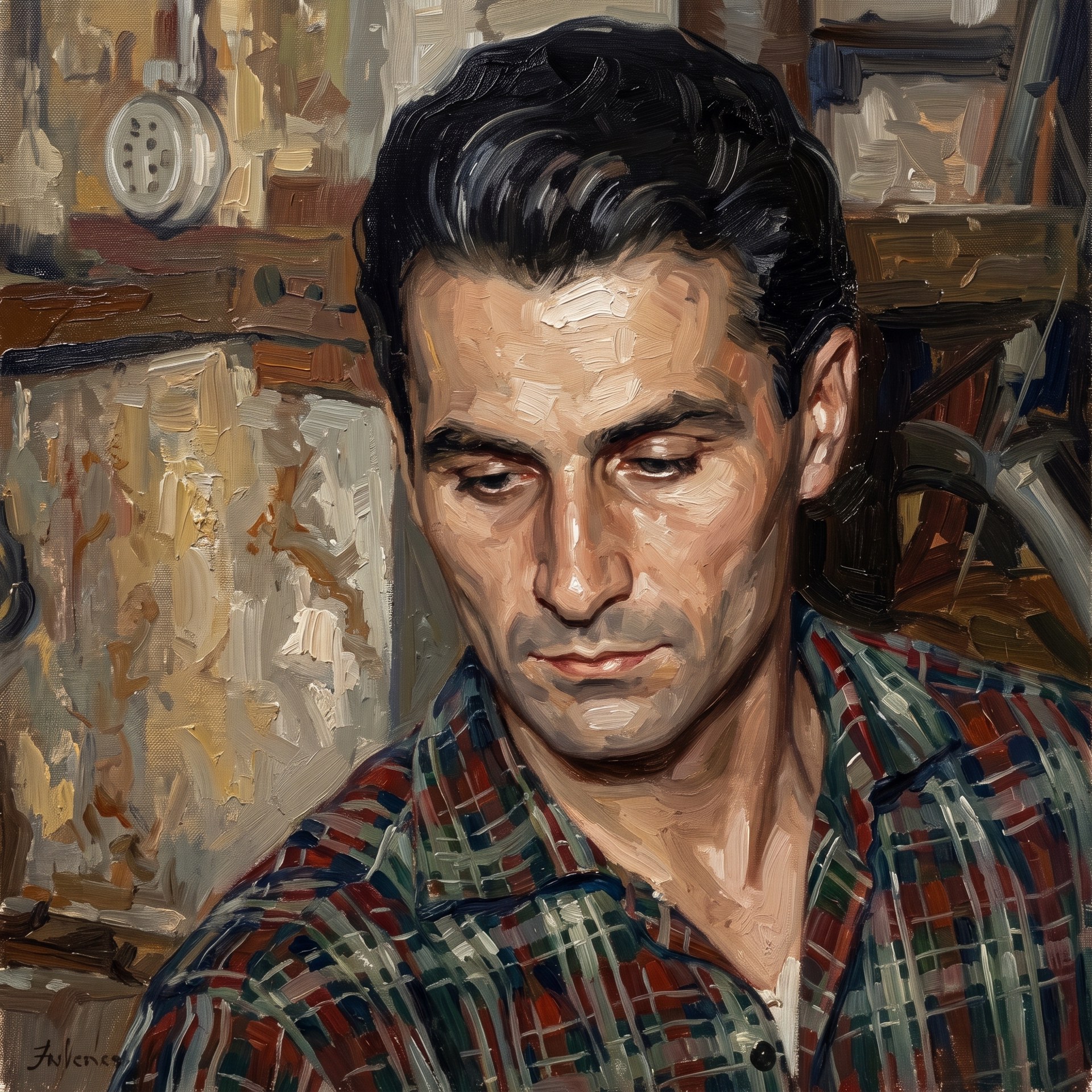
The Murano Maestri: A Collector's Guide Article 1: Ermanno Nason — The Sculptor of the Avant-Garde
The Visionary Designers: A Collector's Guide
Ermanno Nason — The Sculptor of Physical Form
Artist Key: Ermanno Nason
- Role: Master Glassmaker / Sculptor / Designer / Entrepreneur (The Sculptor of Physical Form)
- Life/Dates: Murano, 21 July 1928 – Venice, 2013 (Known as "Pipon" in Murano dialect)
- Primary Furnaces: Nason & Zaniol (Father's furnace, 1937–1939) | BarovierToso & C. (1939–1944) | Fratelli Ferro (1945–1947) | Pinzan & Cimarrosti (1947–1949) | Gino Cenedese & C. (1950–1953) | Industrie Vetrarie Riunite I.V.R. di Mazzega (First Master, 1953–1959) | Vetreria Arte Ermanno Nason s.n.c. (1959–1961) | Scarpa & Nason s.n.c. (1961–1962) | Vetreria Artistica Gino Cenedese & Figlio (First Master, 1964–1972) | Vetraria Arte E. Nason S.N.C. (1972–1994)
- Signature Techniques: A Massello (Solid hot-sculpting from a single block of glass) | Vetro Scavo (Archaeological oxide encrustation) | Vetro Corroso (Sponge-applied selective acid etching) | Alabastro "Seta" (Silk Alabaster) | Chiaro di Luna (Light-shifting Moonlight glass) | Incamiciatura (Multi-layered casing with thickness shifts) | Grigio Fumo & Grigio Acciaio (Monochromatic anatomical steel-smoke fusions)
- Market Price Tier: High-End Investment Grade (specifically 1950s Fucina degli Angeli collaborations with Picasso, Chagall, Cocteau, and Braque; 1960s Cenedese-Da Ros massive sommerso and alexandrite sculptures) to Mid-Range (post-1972 Arte E. Nason "Hommage" series, independent massello sculptures, and Scarpa & Nason utilitarian wares)
- Key Collaborators: Egidio Costantini | Pablo Picasso | Marc Chagall | Georges Braque | Jean Cocteau | Gio Ponti | Luigi Scarpa Croce | Antonio Da Ros | Harold Stevenson | Quinto Nason (brother and lifelong servente)
Summary:
Discover the secrets to identifying, dating, and collecting the powerful, solid glass sculptures of Ermanno Nason, Murano's supreme post-war master of the a massello technique. This comprehensive collector's guide explores his historic collaborations translating original drawings for Pablo Picasso, Marc Chagall, Georges Braque, and Jean Cocteau under Egidio Costantini’s Fucina degli Angeli, as well as his spontaneous "Graal" style creations with Antonio Da Ros at Gino Cenedese & Figlio. Learn how to verify authentic diagnostic markers—including flat-ground polished bases, double engraved signatures, original Vetreria Arte E. Nason paper labels, and the physical chemistry of grey-steel, scavo, and light-shifting Chiaro di Luna glass—to confidently identify his creations and spot true investment-grade masterworks on the secondary market.
Visual Career Timeline
              ┌──────────────────────────────────────────────────────────┐
              │                     ERMANNO NASON                        │
              │             - THE SCULPTOR OF PHYSICAL FORM -            │
              └──────────────────────────┬───────────────────────────────┘
                                         │
     ┌───────┐                           ▼
     │ 1928  │ ──► Born on July 21 into Murano's 14th-century Nason dynasty (Bote branch).
     └───────┘                           │
     ┌───────┐                           ▼
     │ 1937  │ ──► Enters father Italo's furnace, Nason & Zaniol, at age nine as apprentice.
     └───────┘                           │
     ┌───────┐                           ▼
     │1939-45│ ──► Apprenticed at BarovierToso & C. and A.V.E.M. during WWII; blows medicine vials.
     └───────┘                           │
     ┌───────┐                           ▼
     │ 1946  │ ──► Declared a "Maestro" at age eighteen at Pinzan & Cimarrosti glassworks.
     └───────┘                           │
     ┌───────┐                           ▼
     │ 1953  │ ──► Sunday entrance exam at I.V.R. di Mazzega: hired as Maestro di prima piazza.
     └───────┘                           │
     ┌───────┐                           ▼
     │1953-59│ ──► Chief blower for Fucina degli Angeli; translates Picasso & Chagall drawings.
     └───────┘                           │
     ┌───────┐                           ▼
     │1959-63│ ──► Operates specialty workshops: Vetreria Arte E. Nason & Scarpa & Nason s.n.c.
     └───────┘                           │
     ┌───────┐                           ▼
     │1964-72│ ──► First Master at Gino Cenedese; creates Graal spontaneity with Antonio Da Ros.
     └───────┘                           │
     ┌───────┐                           ▼
     │ 1970  │ ──► Crafts monumental crystal and gold lion for Emperor Haile Selassie of Ethiopia.
     └───────┘                           │
     ┌───────┐                           ▼
     │ 1972  │ ──► Reopens independent furnace, Vetraria Arte E. Nason S.N.C., with brother Quinto.
     └───────┘                           │
     ┌───────┐                           ▼
     │ 1988  │ ──► Awarded the "Una Vita per il Vetro" prize by the Chamber of Commerce.
     └───────┘                           │
     ┌───────┐                           ▼
     │ 1994  │ ──► Workshop tragically destroyed in arsonist's fire; forced to retire.
     └───────┘                           │
     ┌───────┐                           ▼
     │ 2013  │ ──► Passes away, leaving behind a monumental solid-glass sculpting legacy.
     └───────┘
1. The Legend & Legacy: The Hands of the Avant-Garde
Born on July 21, 1928, Ermanno Nason belonged to one of Murano's oldest and most prestigious glassmaking lineages, with family records dating back to the 14th century. In the Nason household, glass was not merely a trade; it was an heirloom. Grandfathers, fathers, uncles, and brothers all worked before the furnaces, giving rise to the famous island saying: "pasta de vero dentro al serveo, questo gera i Nason!" (molten glass in their brains, that was the Nasons!). At the young age of nine, Ermanno began helping after school at Nason & Zaniol, the furnace run by his father, Italo "Otello" Nason. He split his formative years between the furnace floor and the Abate Zanetti Apprenticeship School, where he studied drawing under the authoritarian but brilliant designer Vittorio Zecchin. This academic training in anatomical study, geometric proportion, and classical drawing would define his future approach to solid sculpting.
During the hardships of World War II, Nason apprenticed under his father and his uncle Emilio Nason (co-founder of A.V.E.M.), blowing basic wartime necessities like headlight covers and medicine vials. Following the war, he spent two years refining his craft blowing chandeliers at Fratelli Ferro. In 1946, at just eighteen years old, his exceptional talent was recognized when he was proclaimed a Maestro at the Pinzan & Cimarrosti glassworks. After a brief period crafting traditional figures, Nason’s career reached a turning point in 1953 when he was hired by I.V.R. di Mazzega. To secure the job, Nason had to pass a grueling Sunday entrance test by executing three highly complex designs drawn by Artistic Director Luigi Scarpa Croce: a classical cup adorned with three dragons, a female nude, and a pelican.
At I.V.R. di Mazzega, Nason served as the Maestro di prima piazza. It was here that he became the primary physical medium for Egidio Costantini’s legendary Fucina degli Angeli (Forge of the Angels), personally blowing and sculpting masterworks for the greatest artists of the 20th century. Seeking creative independence, Nason later operated his own specialty workshops—Arte E. Nason s.n.c. (1959–1961) on Campo San Bernardo and Scarpa & Nason s.n.c. (1961–1962)—before joining the celebrated furnace of Gino Cenedese & Figlio as first master glassblower from 1964 to 1972.
At Cenedese, Nason enjoyed immense artistic freedom. The firm's director, Gino Cenedese, famously told him: "Maestro, for me it is enough that you make two masterpieces a week". Working in close, non-verbal synergy with Artistic Director Antonio Da Ros, Nason brought classical, biblical, and modern sculptures to life. In late 1972, he reopened his own furnace, Vetraria Arte E. Nason S.N.C., working alongside his beloved brother Quinto Nason as his assistant (servente). Ermanno Nason’s illustrious career came to a sudden, tragic end on February 18, 1994, when an arsonist's fire destroyed his workshop, turning hundreds of priceless, irreplaceable glass sculptures to ash. He passed away in 2013, leaving behind an immortal legacy as the master who taught the avant-garde how to sculpt with fire.
2. The Sculpting Secrets of "A Massello"
While Murano’s post-war market was dominated by thin-blown, weightless glassware, Ermanno Nason’s true passion lay in the monumental, physical potential of heavy, solid glass—a style he mastered through the a massello (solid hot-sculpting) technique.
Nason's work represented a revolutionary transition in Murano glass sculpture. Historically, master glassblowers constructed human and animal figures by modeling the body in separate, hollow parts (torso, head, and four limbs) and then hot-assembling them at the glory hole. Nason, alongside Alfredo Barbini, perfected the technique of modeling the entire figure from a single, solid mass of incandescent glass. This process allowed for highly continuous figures with no breaks or seams, mimicking the organic fluidity of nature.
This method of working demanded immense physical strength, spatial intuition, and absolute control over thermal zones:
- Managing the Heavy Mass: Working with solid, white-hot glass masses weighing up to 30 kilograms (66 pounds) or more required a specialized bench setup. The gaffer had to constantly rotate the heavy mass on the pontil rod (pontello) with one hand to keep the gather perfectly centered, while using jacks, woodblocks, and shears with the other hand to shape the form before the outer layer cooled below its working temperature.
- Controlling the Thermal Zones: Solid glass retains heat internally far longer than hollow-blown glass. If a section of the solid figure cooled too quickly relative to the core, the internal stress would cause the sculpture to violently fracture. Nason had to carefully monitor the temperature of different zones of the sculpture, reheating the outer extremities at the mouth of the furnace without melting the fine detail already modeled into the core.
- Brotherly Synergy at the Bench: A crucial factor in Ermanno’s ability to manipulate such massive solid gathers was his non-verbal working relationship with his brother, Quinto Nason, who served as his lifelong assistant (servente). In the high-temperature environment of the prima piazza, the gaffer and the assistant function as a single physical organism. Quinto anticipated Ermanno's every move, delivering hot gathers of color, flash-heating the pontil rod, and managing the weight of the iron shears to ensure that the molten mass was worked continuously without losing its spatial equilibrium.
3. The Fucina degli Angeli & Post-War Avant-Garde Collaborations
Ermanno Nason served as the supreme physical interpreter for Egidio Costantini’s Fucina degli Angeli (originally formed as the Centro Studio Pittori nell’Arte del Vetro in 1950, co-named by Jean Cocteau in 1958). Speaking no foreign languages, Nason translated two-dimensional sketches and drawings sent by Europe's greatest painters into three-dimensional vitreous sculptures entirely through non-verbal intuition at the glory hole.
- Pablo Picasso: In 1954, Costantini visited Picasso in Vallauris, receiving twelve original drawings for execution in glass. Nason executed Picasso's cubist Portatrice d'Acqua (The Water Carrier, 1954), fusing heavy, solid-glass arms and a carrying jug seamlessly to a paper-thin, hollow-blown balloon torso. Nason also blew Picasso's legendary Gufo (The Owl, 1954) and Flamenco (1954). In the late 1960s/early 1970s, Nason sculpted Il Centauro (The Centaur, c. 1970) as a monumental retrospective tribute to Picasso's retrospective at the 14th Venice Biennale.
- Marc Chagall: Nason acted as Chagall's brush on clear crystal, applying rich, dense fire-enamels to hot dishes to preserve the floating, dreamlike quality of Chagall's Re David (King David, 1960) plate. Later, in his own studio, Nason created a celebrated tribute titled Hommage to Marc Chagall (1960) featuring abstract gesticulating figures.
- Georges Braque: Nason executed the Sweethearts (Innamorati) plate, applying dense, opaque black glass paste with absolute precision to form Braque's signature profile of two kissing birds without any bleeding.
- Jean Cocteau: Nason collaborated closely on-site with Cocteau to blow the Viso di Donna (Face of a Woman) drinking cups. Cocteau was photographed looking at the drinking glass, created from a drawing of his, as the Maestro completed it at the bench.
- Harold Stevenson: In 1969, Nason executed monumental glass sculptures standing approximately 2 meters (6.5 feet) tall and weighing hundreds of pounds for the American painter, representing some of the largest hot-modeled sculptures ever made on Murano.
- Gio Ponti: Nason blew Ponti’s Lights (Luci), a space-age light sculpture formed of intersecting hollow tubes of vivid yellow, cobalt, and crystal.
4. The Cenedese Era & "Graal" Spontaneity
From 1964 to 1972, Nason was employed as First Master at Gino Cenedese & Figlio, collaborating closely with Artistic Director Antonio Da Ros.
In 1965, Nason released himself from standard craftsman's obligations. Granted complete freedom, he would spend entire days away from the fire, meditating on designs before returning to create spontaneous, unique masterworks. In these works, dark, abstract characters are superimposed on gold foil grounds or gesticulating figures are embedded in thick-walled, delicately tinted glass. In their freehand technique, these pieces assimilated the principles of design that govern "Graal" glass.
Significant masterpieces from this golden era include:
- Mosè (Moses, 1964): A monumental head of Moses in solid ruby and aquamarine glass, worked entirely from a block. The first example was so beloved by Gino Cenedese that he allowed Nason to make a second for himself.
- Uomo a Cavallo (Man on a Horse): A massive sculpture in Alexandrite glass, representing a free reinterpretation of Marino Marini’s famous bronze sculpture Miracolo (1953/54).
- Donna Distesa (Reclining Woman): A heavy Alexandrite glass sculpture depicting a reclining woman, based on the abstract, organic forms of Henry Moore.
- Nano (Dwarf, c. 1964): A grotesque figure in Alexandrite glass worked a massello weighing 30 kg (66 lbs). This piece formed part of a group of three deformed dwarfs arranged in a circle, juxtaposed with three tall nudes replicating Auguste Rodin’s celebrated Les Ombres to highlight the physical contrast of human beauty and ugliness.
- Haile Selassie Lion (November 1970): A majestic, 52 cm high crystal and gold lion commissioned for the Emperor of Ethiopia, Haile Selassie, who rewarded Nason with a pure-gold medal.
5. The Chemistry of Surface Weathering: Advanced Scavo and Corroso Modeling
Ermanno Nason understood that the physical presence of a solid sculpture was determined not only by its shape but by how its surface interacted with light. To achieve a weathered, historic, or primitive appearance, he developed advanced surface treatments that permanently altered the glass skin at the furnace or in the cold shop:
- Advanced Vetro Scavo Modeling (The Excavation Technique): Perfected during his independent studio years in the 1970s and 1980s, this chemical treatment gave hot, solid-modeled glass the appearance of ancient glass that had been buried in archaeological excavations for centuries.
- The Chemical Process: While the solid sculpture—such as his famous 1980s Amanti (Lovers) vase—was completed and still white-hot on the pontil rod at temperatures around 900°C, Nason sprinkled its outer surface with a dry, highly reactive powder mixture of potassium carbonate, sodium carbonate, calcium carbonate, and manganese dioxide. When reheated inside the glory hole, these mineral salts and metal oxides chemically reacted with the molten silica, fusing directly into the outer skin. This process formed a rough, chalky, and multi-colored crust of grey-brown corrosion. When cooled and treated with mild acid washes, the loose excess powders dissolved, leaving a highly structured, iridescent, and chemically corroded finish that perfectly replicated ancient glass.
- The Textures of Vetro Corroso (Acid-Corrosion): To soften the high-gloss reflection of heavy glass masses and emphasize their anatomical volume, Nason utilized a specialized chemical etching process on cold, annealed pieces.
- The Chemical Process: Once the solid figure—such as his reclining nudes—was fully annealed and cold, Nason applied a protective resist of crackled wax or lacquer irregularly across the surface using a porous sea sponge. The sculpture was then submerged in lead tubs filled with sawdust or rough wood shavings soaked in hydrofluoric acid. The acid selectively bit into the unprotected glass, creating an irregular, deeply pitted, and frosted matte finish (corroso) resembling natural water-worn stone or ancient glacial ice. This selective corrosion scattered ambient light across the anatomical curves, eliminating surface glare and directing the viewer's focus to the pure physical mass and internal shadows of the sculpture.
6. The Metallurgy and Alchemy of Chemical Coloring Recipes
A meticulous technical researcher, Nason continuously documented, experimented with, and refined his partie (glassmaking chemical recipes), collaborating with Cenedese's color chemists to develop custom formulations that enhanced the visual mass of his solid sculptures:
- Alabastro "Seta" (Silk Alabaster): Developed during his 1950s residency at I.V.R. di Mazzega for his classical vases and oriental figurines, this semi-opaque glass achieved a warm, translucent, and milk-like appearance. By adding precise quantities of calcium phosphates, fluorides, and tin oxides to the crucible, Nason created a dense suspension of microscopic crystals that scattered light internally, giving the finished sculpture a soft, tactile, and velvet-like silk sheen.
- The Chemistry of Chiaro di Luna (Moonlight Glass): Nason's most celebrated chemical achievement, developed in his independent workshop, was a highly sensitive, light-shifting glass named Chiaro di Luna. Inspired by Cenedese's famous alexandrite glass, Nason formulated a batch containing high concentrations of neodymium and praseodymium oxides. This specific chemical structure caused the glass to absorb different wavelengths of light depending on the light source. Under natural daylight or fluorescent light, the sculpture presented a cool, pale, and watery green hue. When moved under warm incandescent light, it shifted to a soft, delicate pink, mimicking the changing gradations of the moon through different seasons of the year.
- Anatomical Grigio Fumo & Grigio Acciaio: To highlight the muscular tension of his solid massello figures, Nason avoided standard bright colors, choosing instead to develop custom-formulated shades of smoke-grey (grigio fumo) and steel-grey (grigio acciaio). By chemically balancing small percentages of iron, manganese, and cobalt oxides inside heavy crystal melts, Nason created a transparent, moody glass that absorbed light in thick sections while remaining highly transparent in thinner extremities. This chemical formulation established a beautiful, high-contrast play of internal highlights and deep shadows that emphasized the physical power of his figures.
- Iridato Reduction Fumes: To achieve a shimmering metallic luster on pieces like his 1977 Ibis and 1978 Tucano, Nason exposed the hot glass to metallic vapors. While the completed object remained at a working temperature on the pontil rod, it was placed in a specialized reducing chamber where tin chloride or titanium salts were evaporated under an oxygen-deprived (reducing) atmosphere. This process deposited a microscopically thin metallic film on the surface, creating an iridescent rainbow sheen that reflected ambient light beautifully.
7. The Forensic Chronology of Nason Markings & Signatures (1937–1994)
To confidently identify, date, and authenticate an Ermanno Nason sculpture, collectors must understand the precise evolution of markings, paper labels, and base signatures used by his workshops across different eras:
I. The Early Apprenticeship & Pre-Mazzega Eras (1937–1952)
- The Unsigned Rule: All pieces executed by Nason during his early apprenticeship at BarovierToso & C., A.V.E.M., Fratelli Ferro, and Pinzan & Cimarrosti were completely unsigned. No acid stamps or engraved signatures were used. Verification depends strictly on matching historical exhibition logs and corporate furnace records.
II. The I.V.R. di Mazzega & Fucina degli Angeli Era (1953–1959)
- Diagnostic Paper Labels: Standard production wares carry a rectangular paper factory label reading:
INDUSTRIA VETRARIA RIUNITE MAZZEGA - MURANOprinted in black ink. - Fucina markings: Works executed by Nason for Costantini are never signed by Ermanno Nason. Instead, they carry a hand-etched or wheel-engraved signature of Egidio Costantini reading:
Egidio Costantini / Fucina degli Angeli(or displaying the artist's signature, such as Picasso or Cocteau, accompanied by the exact year of execution).
III. The Specialty Workshops Era: Scarpa & Nason s.n.c. (1959–1963)
- Diagnostic Paper Labels: Simple, rectangular paper stickers reading:
SCARPA & NASON - MURANO(with the specific model and color code written in blue/black ink). - Signatures: No base signatures are present on these utilitarian production pieces.
- The Rare Tribute Signature: Highly specific art pieces crafted during his brief independent window (such as his 1959 Burlesco vase) carry a delicate hand-guided signature reading:
omaggio A BIANCONI E. Nason 1959orOMAGGIO A PICASSO E. Nasonwritten in cursive script.
IV. The Gino Cenedese & Figlio Era (1964–1972)
- The Flat Ground Base: Cenedese glassware of this era is characterized by its immaculately finished, flat-ground, and highly polished optical-grade base.
- The Diamond-Point Signature: Look for a crisp, cursive hand-guided diamond-point signature reading:
CenedeseorG. Cenedese Muranoon the polished underside of the base. - Combined Da Ros Signatures: Premium collaborative pieces designed by Da Ros and blown by Nason carry a hand-guided diamond-point signature reading:
Cenedese Antonio Da Ros [Date]
V. The Independent Master Studio: Vetraria Arte E. Nason S.N.C. (1972–1994)
This era represents the peak of Nason's independent hand-signed production.
- The Standard Cursive Signature: Works are consistently basemarked with a hand-guided cursive signature reading:
E. NasonorE. Nason Murano - The Double Signature Rule: To identify Nason’s finest, self-selected solid sculptures, collectors must look for a highly distinct double engraved signature reading
E. Nasontwice on different areas of the base, representing his personal mark of artistic supreme quality. - Dated Signatures: Premium creations and exhibition pieces are often dated, reading
E. Nason 1974,E. Nason 1985, orE. Nason 1988 Murano. - The "Hommage" Series: Variations of historical avant-garde drawings are engraved on the base with the title
Hommage a PicassoorHommage a Marc Chagallaccompanied by his signature. - The S.N.C. Paper Labels: Rectangular paper labels divided vertically, with the left side reading
MURANO / VETRERIA / ARTE / ERMANNO NASON & C. / S.N.C.and the right side listing model and color codes. - The Post-1994 Retirement Warning: Ermanno Nason ceased all furnace operations in 1994 after the tragic destruction of his studio. Collectors must understand that any piece carrying a vibro-engraved or diamond-point signature post-dating 1994 represents either a late-century retrospective signature applied to an earlier stock piece, or a counterfeit.
8. The Collector's Diagnostic Checklist & Market Realities
- Evaluating Base and Pontil Finishes: Base finish is the ultimate indicator of different eras. Cenedese-era pieces (1964–1972) have perfectly flat, optical-grade polished bases. When Nason opened Vetraria Arte E. Nason in 1972, he continued to blow some of his Cenedese designs. However, his independent and later productions are distinguished by a slightly less finished, rougher, or partially unpolished pontil base, reflecting his workshop's shift from industrial processing to a small-scale, artisanal studio.
- Differentiating Uncle Emilio Nason’s Figures: Entry-level collectors frequently confuse Ermanno Nason’s solid massello sculptures with those of his uncle, Emilio Nason (AVEM). Emilio’s AVEM figures are characterized by a lighthearted, humorous, and caricature-like style (such as stylized Africans, Indians, or Commedia dell'arte figures). Ermanno Nason's solid sculptures, by contrast, reject caricature for muscular, restless, powerful, and deeply anatomical forms inspired by modern masters like Henry Moore and Rodin.
- The Picasso Forgery Alert: Due to the record-breaking prices of original 1950s Fucina degli Angeli Picasso sculptures, the market contains numerous modern counterfeits. Authentic 1954 executions are distinguished by the immaculate clarity of the color boundaries (where solid colored glass joins crystal) and the presence of original, verified Fucina degli Angeli acid stamps. Forgeries are instantly betrayed by messy color overlaps, air pockets at the joints, and modern sandblasted signatures.
9. Attribution & Authenticity
In the Murano glassmaking tradition, the difference between a fake and a copy rests entirely on intent, origin, and transparent attribution. A fake is a deceptive counterfeit manufactured outside of Murano—often in mass production factories in Asia or Eastern Europe—that utilizes cheap materials and carries forged signatures or illicit trademark stickers to intentionally defraud collectors. Conversely, a copy is a legitimate artistic homage (omaggio) handcrafted by a skilled master using authentic Murano techniques and materials; it serves as a tribute to honor a legendary artisan's legacy and is openly signed by the modern creator, preserving the lineage of Venetian glassblowing rather than exploiting it.
Join Our Facebook Group Identify Your Murano - Murano Glass Animals