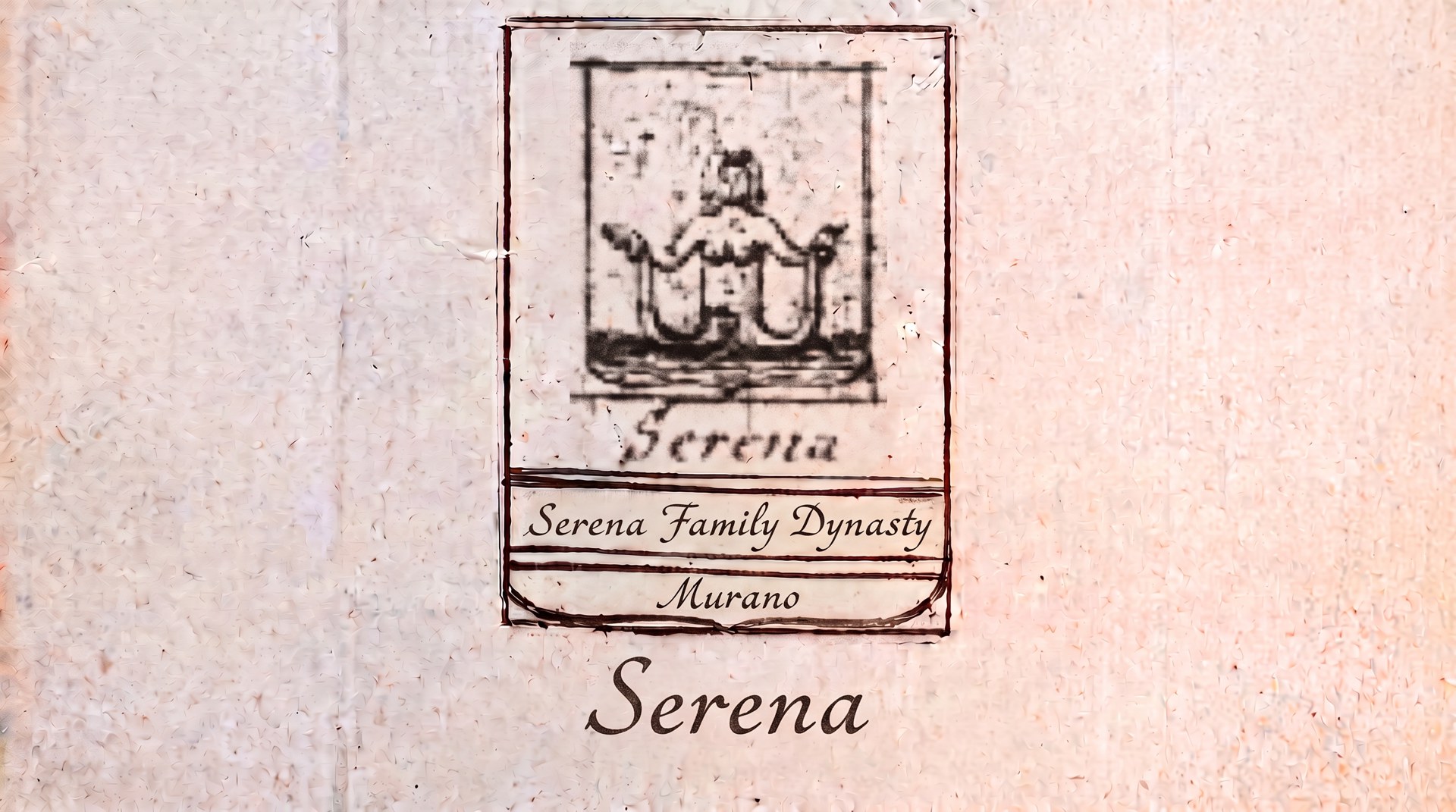
The Serena Dynasty: 1527 Filigree Patent, Angelo Chandeliers & Livio Serena Ohira Guide
The Serena Family Murano Dynasty — 16th-Century Alla Serena & Tre Croce d'Oro Roots, Filigree Patent Pioneers, 19th-Century Monumental Chandelier Masters, and Yoichi Ohira Collaborations
Dynasty Key: The Serena Dynasty
- Active Dynasty Window: 1483 – Present (documented across five centuries from Filippo and Bernardino Catani's 1483 arrival from Bergamo and the 1517 founding of the 'Alla Serena' furnace to the 1527 filigree patent, the registration of 8 Serena masters in Il Libro d'Oro di Murano, 19th-century monumental chandeliers by Angelo Serena, and Livio Serena's legendary master-blower partnership with Yoichi Ohira)
- Ancestral Seat & Primary Kilns / Studios: Alla Serena Glassworks (Murano, 1517) | Tre Croce d'Oro Glassworks (Murano, c. 1536–mid-1600s) | Salviati & C. / C.V.M. (1870s) | Vetreria Fratelli Toso (1860s chandelier collaborations) | Vetreria de Majo | Vetreria Anfora (Murano, 1990s–2000s) | Fratelli Zanetti | Esse 2 S.a.s. di Serena Carlotta & C. (VAM Code 065)
- Hereditary Master Glassmakers, Directors & Sculptors:
- 1517 Founders: Filippo Catani (Bergamasco painter & founder of Alla Serena furnace in 1517) | Bernardino Catani (co-founder of Alla Serena)
- 16th-Century Masters: Vincenzo Serena (son of Bernardino, continued Alla Serena) | Giandomenico Serena (1516–1580, also known as Giandomenico Catani de la Serena, founder of Tre Croce d'Oro furnace at age 20 in 1536)
- Inscribed Patrician Masters in Il Libro d'Oro di Murano:
- Ser Lorenzo Serena (q. Zuan Domenico, co-director of Tre Croce d'Oro)
- Ser Alvise Serena (q. Zuan Domenico, co-director of Tre Croce d'Oro)
- Ser Battista Serena (q. Zuan Domenico, late 16th-c. furnace operator)
- Ser Camillo Serena (q. Zuan Domenico, patrician master)
- Ser Girolamo Serena (q. Zuan Domenico, patrician master)
- Ser Gasparo Serena (q. Vicenzo, master at Alla Serena)
- Ser Zuanne Serena (d. Lorenzo, 3rd-generation master)
- Ser Battista Serena (q. Alvise, 3rd-generation master)
- Ser Zuan Piero Serena (q. Girolamo, 3rd-generation master)
- 19th–21st Century Masters: Angelo Serena (19th-c. master designer of the monumental 1860 and 1864 Fratelli Toso chandeliers) | Giovanni Serena (19th-c. master glassblower at Salviati & C.) | Livio Serena (nicknamed "Maisasio", chief master blower at de Majo & Anfora, legendary collaborator of Yoichi Ohira) | Gianni Serena (master glassmaker at Fratelli Zanetti) | Carlotta & Francesco Serena (operators of Esse 2 S.a.s., VAM Code 065)
- Signature Technical & Material Inventions: Re-invention / Patent of Vetro a Filigrana (Zanfirico / Retortoli, 10-year Council of Ten patent granted in 1527 to Filippo & Bernardino Catani) | Renaissance Cristallo and Lattimo Canes | 1864 Monumental 60-Branch Chandelier (acclaimed as the largest executed on Murano to that date) | Free-Blown Polychrome Tesserae & Murrina Vessels (co-created with Yoichi Ohira at Anfora)
- Market Price Tier: High-End Fine Art Investment Grade (Yoichi Ohira unique vessels blown by master Livio Serena "Maisasio" command top international auction prices ranging from $15,000 to $80,000+; Renaissance Serena filigree vessels and 19th-century chandeliers hold premier museum and institutional value)
- Key Collaborators: Yoichi Ohira | Giacomo Barbini (master engraver) | Andrea Zilio | Egidio Costantini (Fucina degli Angeli) | Vetreria de Majo | Vetreria Anfora | Salviati & C. | Vetreria Fratelli Toso | Fratelli Zanetti
Summary:
Uncover the 500-year legacy of The Serena Dynasty, Murano's premier family of filigree pioneers, monumental chandelier architects, and modern fine-art glassblowers. This comprehensive guide explores Filippo and Bernardino Catani's 1517 Alla Serena furnace, the historic 1527 Council of Ten filigree patent, Giandomenico Serena's 16th-century Tre Croce d'Oro glassworks, the registered patrician masters in Il Libro d'Oro di Murano, Angelo Serena's record-breaking 1864 Fratelli Toso chandelier, and Livio Serena's ("Maisasio") legendary master-blower collaboration with Yoichi Ohira at Vetreria Anfora. Includes forensic signature identification for
Yoichi Ohira m. L Serenainscriptions, Serenella Arte decals, and VAM Code 065 attributions.
Genealogical Lineage Map
┌─────────────────────────────────────────────────────────────────────────────────────────────┐
│                                    THE SERENA DYNASTY                                       │
│                    - ANCESTRY & GENEALOGICAL DESCENT (1483 – PRESENT) -                     │
└──────────────────────────────────────────────┬──────────────────────────────────────────────┘
                                               │
                         Filippo Catani                 Bernardino Catani
                   (Alla Serena Founder 1517)           (Co-Founder Alla Serena)
                               │                               │
═══════════════════════════════╪═══════════════════════════════╪═══════════════════════════════
                               │                               │
                        Vincenzo Serena                Giandomenico Serena
                     (Alla Serena Master)             (1516–1580, Tre Croce)
                               │                               │
                     ┌─────────┴─────────┐       ┌─────────────┼─────────────┬─────────────┐
                     │                   │       │             │             │             │
               Gasparo Serena         Lorenzo  Alvise       Battista      Camillo       Girolamo
             (Libro d'Oro)            Serena   Serena        Serena        Serena        Serena
                     │                   │       │             │             │             │
                     │                   │       │             │             └──────┬──────┘
                     │                   │       │             │                    │
                     │                Zuanne  Battista         │                Zuan Piero
                     │                Serena   Serena          │                  Serena
                     │                   │       │             │                    │
                     └───────────────────┴───────┼─────────────┴────────────────────┘
                                                 │
                                           Angelo Serena
                                    (1860s Chandelier Architect)
                                                 │
                                          Giovanni Serena
                                     (1870s Salviati Master)
                                                 │
                   ┌─────────────────────────────┴─────────────────────────────┐
                   │                                                           │
              Livio Serena                                               Gianni Serena
         ("Maisasio", Anfora)                                        (Zanetti Sculptor)
         [Yoichi Ohira Partner]                                                │
                                                                      Carlotta & Francesco
                                                                     (Esse 2, VAM Code 065)
📖 Narrative Walkthrough of the Family Tree: How the Branches Connect & Where Lineages Split
The Serena Dynasty stands as one of the foundational pillars of Venetian glass history. For over five centuries, members of this illustrious family have pushed the boundaries of hot-glass technique, from securing the historic 1527 Council of Ten patent for filigree glass to inscribing 8 patrician masters in Il Libro d'Oro di Murano, erecting 19th-century record-breaking chandeliers, and blowing the world-renowned 1990s avant-garde masterworks of Yoichi Ohira:
1. Branch 1: The Bergamasco Founders & The 1527 Filigree Patent
- Arrival & The Alla Serena Sign (1483–1517): In 1483, brothers Filippo Catani and Bernardino Catani migrated to Murano from Bergamo. Filippo originally registered as a glass painter before receiving official Venetian authorization in 1517 to open an independent furnace under the shop sign of a mermaid, Alla Serena.
- Adoption of the Surname "Serena": From the iconic furnace sign Alla Serena, subsequent generations adopted "Serena" as their formal hereditary surname.
- The 1527 Filigree Patent: In 1527, Filippo and Bernardino Catani (de la Serena) petitioned the Council of Ten for an exclusive ten-year patent for a revolutionary decorative technique: vetro a retortoli (filigree glass featuring spiraled milk-glass lattimo and crystal canes). The patent was granted, establishing the Serena family as the documented inventors/re-inventors of Renaissance filigree.
2. Branch 2: The Tre Croce d'Oro Furnace & The Libro d'Oro Inscription
- Giandomenico Serena (1516–1580): Son of Bernardino Catani, Giandomenico Serena (also recorded as Giandomenico Catani de la Serena) demonstrated precocious genius, establishing his own furnace, Tre Croce d'Oro (Three Gold Crosses), by the age of 20 (c. 1536).
- The Inscribed Patrician Masters in Il Libro d'Oro di Murano: Upon the compilation of Il Libro d'Oro di Murano, eight patrician glassmasters (Sereni) were officially inscribed, representing both the direct sons and grandsons of Giandomenico Serena (Tre Croce d'Oro) and the senior line of Vincenzo Serena (Alla Serena):
- Ser Lorenzo Serena q. s. Zuan Domenico: Co-director of Tre Croce d'Oro.
- Ser Alvise Serena q. s. Zuan Domenico: Co-director of Tre Croce d'Oro.
- Ser Battista Serena q. s. Zuan Domenico: Master at a parallel late-1500s kiln.
- Ser Camillo Serena q. s. Zuan Domenico: Registered patrician master.
- Ser Girolamo Serena q. s. Zuan Domenico: Registered patrician master.
- Ser Gasparo Serena q. s. Vicenzo: Master continuing the senior Alla Serena line.
- Ser Zuanne Serena d. s. Lorenzo: 3rd-generation master (son of Lorenzo).
- Ser Battista Serena q. s. Alvise: 3rd-generation master (son of Alvise).
- Ser Zuan Piero Serena q. s. Girolamo: 3rd-generation master (son of Girolamo).
3. Branch 3: The 19th-Century Chandelier Renaissance & Modern Virtuosity
- Angelo Serena & The Monumental Chandeliers (1860s): During Murano's 19th-century glass renaissance, Angelo Serena established himself as a master lighting architect. Collaborating with Vetreria Fratelli Toso, Angelo designed and executed two celebrated monumental chandeliers in 1860 and 1864, the latter acclaimed internationally as the largest blown glass chandelier executed on Murano up to that time.
- Giovanni Serena & Salviati & C.: In the 1870s, Giovanni Serena served as chief master glassblower at Salviati & C. and the Compagnia di Vetri e Mosaici, remaining dedicated to the furnace after Antonio Salviati's 1877 corporate withdrawal.
- Livio Serena ("Maisasio") & Yoichi Ohira (1993–2004): In the late 20th century, Livio Serena (nicknamed "Maisasio"), chief master blower at Vetreria de Majo and later Vetreria Anfora, entered a historical artistic partnership with Japanese master artist Yoichi Ohira. Between 1993 and 2004, Livio Serena executed Ohira's complex, one-of-a-kind blown tesserae and murrina vessels. Honoring their equal partnership, Ohira insisted on dual-signing every piece:
Yoichi Ohira m. L Serena. - Contemporary Maestri: In the modern era, Gianni Serena serves as master glassmaker at Fratelli Zanetti, while Carlotta and Francesco Serena operate Esse 2 S.a.s. (assigned official Vetro Artistico® Murano VAM Code 065).
1. The Renaissance Genesis: Catani "Alla Serena" Furnace & The 1527 Filigree Patent (1483–1600s)
The historical origin of the Serena dynasty represents one of the most documented technical breakthroughs in Renaissance art history:
Filippo & Bernardino Catani (1483–1517)
- From Bergamo to Murano: In 1483, Filippo Catani and his brother Bernardino arrived on Murano. Filippo initially worked as an artisan decorator and glass painter, mastering the chemistry of enamel glazes and gold-leaf application.
- Founding "Alla Serena": In 1517, the Venetian Senate and the Council of Ten granted Filippo permission to erect a new melting furnace. Filippo chose as his furnace emblem a siren (serena), naming the works Alla Serena.
The 1527 Council of Ten Patent for Retortoli Filigree
- The Technical Breakthrough: In 1527, Filippo and Bernardino Catani developed a method for embedding spiraled, twisted threads of opaque white milk glass (lattimo) within clear, high-purity cristallo.
- The Patent Grant: Recognizing the immense commercial and artistic value of this creation, the Council of Ten granted the Catani brothers a 10-year exclusive patent for vetro a retortoli (later termed zanfirico in the 19th century). This patent legally protected the technique across the Venetian Republic and established Murano as the undisputed capital of filigree glass.
2. The Tre Croce d'Oro Lineage & The Inscription in Il Libro d'Oro di Murano (1536–1700s)
Giandomenico Serena (1516–1580) & Tre Croce d'Oro
- A Youthful Prodigy: Son of Bernardino Catani, Giandomenico Serena (Giandomenico Catani de la Serena) mastered bench gaffing at an early age. By 1536, at just 20 years old, he opened his own furnace, Tre Croce d'Oro (Three Gold Crosses).
- Patrician Guild Status: Giandomenico expanded the family's kiln operations, producing refined soffiati hollowware, filigree goblets, and enameled parade dishes for European royal courts.
The Registry in Il Libro d'Oro di Murano
When the Venetian Republic compiled Il Libro d'Oro di Murano, the Serena dynasty (Sereni) was inscribed with full patrician status. The registered masters are systematically cataloged below:
| Inscription in Il Libro d'Oro di Murano | Venetian Dialect Formula | Lineage Mapping & Furnace Function |
|---|---|---|
| Ser Battista Serena | q. s. Alvise | 3rd-Generation Master; son of the late Alvise Serena (Tre Croce d'Oro). |
| Ser Battista Serena | q. s. Zuan Domenico | 2nd-Generation Master; son of Giandomenico Serena; late 16th-c. kiln operator. |
| Ser Camillo Serena | q. s. Zuan Domenico | 2nd-Generation Master; son of Giandomenico Serena; patrician glassmaker. |
| Ser Girolamo Serena | q. s. Zuan Domenico | 2nd-Generation Master; son of Giandomenico Serena; patrician furnace owner. |
| Ser Lorenzo Serena | q. s. Zuan Domenico | 2nd-Generation Master; co-director of Tre Croce d'Oro (1580–1640s). |
| Ser Zuanne Serena | d. s. Lorenzo | 3rd-Generation Master; son of the living director Lorenzo Serena. |
| Ser Zuan Piero Serena | q. s. Gir.mo | 3rd-Generation Master; son of the late Girolamo Serena. |
| Ser Gasparo Serena | q. Vicenzo | Senior Line Master; son of Vincenzo Serena (Alla Serena furnace line). |
Inscription in Il Libro d'Oro di Murano conferred civic nobility, the right to mint private currency (oselle), and exclusive furnace ownership rights across the Venetian Republic.
3. The 19th-Century Revival: Angelo Serena's Chandeliers & Salviati Masters (1860s–1890s)
Angelo Serena & The 1864 Monumental Chandelier
- Reviving Polychrome Lighting: During Murano's 19th-century glass renaissance, Angelo Serena specialized in complex architectural lighting frameworks.
- The Fratelli Toso Collaboration: Working at the Fondamenta Colleoni kilns of Vetreria Fratelli Toso, Angelo designed two monumental multi-tiered chandeliers in 1860 and 1864. The 1864 chandelier featured 60 intricate branches, hand-blown flowers, and polychrome pendants, winning international acclaim as the largest glass chandelier ever constructed on Murano.
Giovanni Serena & Salviati & C.
- Master Gaffer at Salviati: In the 1870s, Giovanni Serena joined Antonio Salviati's Società Anonima per azioni Salviati & C. as a lead master blower, specializing in historicist blown vessels and delicate filigree revivals. When Salviati withdrew in 1877 to form a new company, Giovanni remained with the successor Compagnie di Vetri e Mosaici di Venezia e Murano, preserving technical continuity at the C.V.M. furnace.
4. The Modern Fine-Art Partnership: Livio Serena "Maisasio", Yoichi Ohira & Vetreria Anfora (1990s–2000s)
In the late 20th century, the Serena family made a monumental contribution to modern studio glass through the collaboration between Livio Serena and Yoichi Ohira:
Livio Serena ("Maisasio") & Yoichi Ohira (1993–2004)
- The Master Blower's Virtuosity: Born into the ancient Serena glassmaking dynasty, Livio Serena (nicknamed "Maisasio") earned recognition as one of Murano's most technically accomplished maestri soffiatore.
- The De Majo Years: Ohira first met Livio Serena while serving as artistic director for Vetreria de Majo (1987–1992). When Ohira transitioned to independent studio art in 1993, he chose Livio Serena as his exclusive master glassblower.
- Execution at Vetreria Anfora: Working at Vetreria Anfora on Murano alongside expert cold-cutter (molatore) Giacomo Barbini, Livio Serena executed Ohira's revolutionary designs. Ohira prepared fused plates of opaque and transparent glass tesserae (canne and murrine), which Livio picked up on the blowpipe (rolling-up), blew into exquisite, balanced silhouettes, and hand-shaped while white-hot.
Dual Attribution & Signature Honor
- The Dual Inscription Standard: In a historic departure from traditional Muranese anonymity, Yoichi Ohira insisted that every single unique piece be co-signed with Livio Serena's name. Authentic pieces bear diamond-point base inscriptions reading:
Yoichi Ohira m. L Serena 1/1 unico [Date] Murano - Museum Consecration: Masterworks executed by Livio Serena for Yoichi Ohira are preserved in the permanent collections of the Victoria and Albert Museum (London), the Metropolitan Museum of Art (New York), the Musée des Arts Décoratifs (Paris), and The Corning Museum of Glass.
5. Technical & Material Innovations: Batch Chemistry & Surface Form
The Serena dynasty pioneered groundbreaking material, filigree, and blown vessel techniques across five centuries:
| Technical Innovation | Italian Name | Physical Description & Furnace Chemistry | Historical Era & Primary Innovator |
|---|---|---|---|
| Spiraled Filigree Patent | Vetro a Retortoli | Intricate spiraled white milk-glass (lattimo) canes embedded within clear cristallo. | Invented & patented 1527 by Filippo & Bernardino Catani (Alla Serena). |
| Monumental Chandelier Framing | Ciocca Monumentale | Multi-tiered, 60-branch architectural lighting structure with blown floral drops. | Designed 1860–1864 by Angelo Serena with Fratelli Toso. |
| Roll-Up Fused Tesserae Blowing | Soffiatura da Piastra Fusa | Fused mosaic plates of murrine and glass canes rolled onto blowpipe and hot-blown into vessels. | Mastered 1993–2004 by Livio Serena "Maisasio" for Yoichi Ohira at Anfora. |
| Dual-Artist Co-Signing | Incisione Co-Firmata | Diamond-point base inscription explicitly crediting both designer and master blower (m. L Serena). | Established 1993 by Yoichi Ohira & Livio Serena. |
6. Forensic Master Registry: Explicit Mapping of Markings, Signatures & Decals to the Genealogical Lineage Tree
Cross-referencing hand signatures, diamond-point inscriptions, factory labels, and regional concessionaire seals directly against the Genealogical Lineage Map is essential for authenticating Serena family artifacts across five centuries:
I. Hand-Etched Personal & Collaborative Base Signatures
-
Yoichi Ohira m. L Serena(Collaborative Fine-Art Inscription)- Physical Medium & Tool: Fine diamond-point cursive base signature applied directly to cold glass pontil.
- Exact Text:
Yoichi Ohira m. L Serena 1/1 unico [Date] Murano(orYoichi Ohira m. L. Serena). - Exact Lineage Tree Mapping: Branch 3 Master Blower → Livio Serena ("Maisasio") (collaborating with Yoichi Ohira at Vetreria Anfora).
- Curatorial Context: Found exclusively on authentic one-of-a-kind studio vessels executed between 1993 and 2004.
-
Gianni Serena/G. Serena- Physical Medium & Tool: Diamond-point or vibro-engraved base signature.
- Exact Text:
Gianni SerenaorG. Serena Murano. - Exact Lineage Tree Mapping: Branch 3 Contemporary Line → Gianni Serena (master glassmaker at Fratelli Zanetti).
- Curatorial Context: Applied to solid-glass wildlife sculptures and art glass vessels produced at the Zanetti workshop.
-
Maestro L. Serena- Physical Medium & Tool: Vibro-engraved base signature on studio glass pontil.
- Exact Text:
Maestro L. Serena Murano. - Exact Lineage Tree Mapping: Branch 3 Studio Line → Livio Serena ("Maisasio").
- Curatorial Context: Found on independent studio glass executions and exhibition prototypes produced at de Majo and Anfora.
II. Factory Decals, Gallery Stickers & Concessionaire Seals
-
Item 4: Factory Decal — Serenella Arte (
SERENELLA arte)- Physical Medium & Material: Rectangular paper adhesive decal with blue printed border and central stylized blue oval 'S' emblem.
- Exact Printed Text:
- Line 1:
SERENELLA - Line 2:
a r t e - Line 3:
MURANO
- Line 1:
- Exact Lineage Tree Mapping: Branch 3 Studio Atelier → Serenella Arte / Vetreria Serenella (Fondamenta Serenella / Sacca Serenella furnace district).
- Curatorial Context: Primary factory decal documented in master label compendiums (p. 55/57), affixed to authentic studio art glass vessels, murrina bowls, and decorative animal sculptures executed by Serena family masters in the Serenella furnace zone.
-
Item 5: Vetro Artistico® Murano Regional Seal (VAM Code
065)- Physical Medium & Material: Official red or blue adhesive security seal with anti-counterfeiting regional markings, barcode, and serial number.
- Exact Printed Text:
- Line 1:
Vetro Artistico® Murano - Line 2:
065(assigned concessionaire code)
- Line 1:
- Exact Lineage Tree Mapping: Consortium Concessionaire → Esse 2 S.a.s. di Serena Carlotta e Francesco & C. (VAM Code
065). - Curatorial Context: Official regional authentication seal verifying production by Carlotta and Francesco Serena at Esse 2 under Veneto Regional Law 70/94.
7. Attribution & Authenticity
Authenticating Serena family glass requires technical and material discernment across five centuries:
- 16th-Century Filigree Verification: Renaissance Serena vetro a retortoli features hand-drawn milk-glass (lattimo) threads embedded within thin, lightweight cristallo. Pontil marks show period-correct 16th-century hand snapping and wear.
- 1864 Chandelier Identification: Authentic Angelo Serena / Fratelli Toso 19th-century chandeliers display heavy multi-tiered iron central armatures, hand-formed glass flower cups, and rich polychrome glass drops free of mold seams.
- Yoichi Ohira / Livio Serena Masterworks: Genuine Ohira/Serena vessels possess exceptional weight, dense fused mosaic cane placement, flawless hand-blown shaping, and crisp, authentic diamond-point co-signatures (
Yoichi Ohira m. L Serena). Beware of unsigned pieces or crude imitations lacking Livio Serena's signature master-blower line.
Join Our Facebook Group Identify Your Murano - Murano Glass Animals