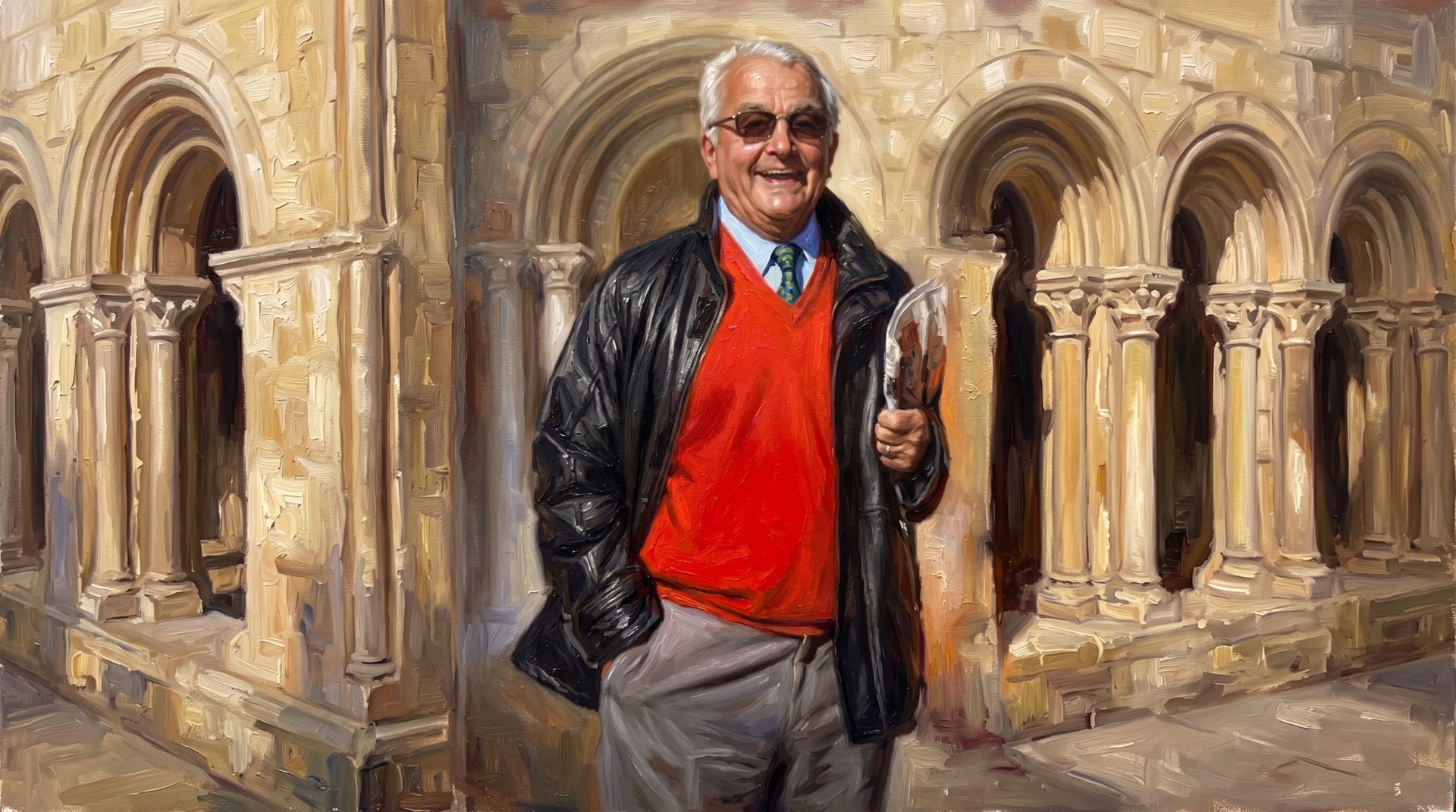
Murano Maestro Francesco Ongaro — The Minimalist Speed Demon
The Visionary Designers: A Collector's Guide
Francesco Ongaro — The Minimalist Speed Demon
Artist Key: Francesco Ongaro
- Role: Master Glassmaker / Maestro (The Minimalist Speed Demon)
- Life/Dates: Murano, 1929 – Venice, Unknown (Active through the late 1980s)
- Primary Furnaces: Venini & Company (1942–1986)
- Signature Techniques: Soffiatura alla Cieca (Blind blowing) | Incalmo | Complex asymmetric blowing | Threaded spiral cylinders | Opaque-to-transparent fusions
- Market Price Tier: High-End Investment Grade (specifically 1961–1962 Thomas Stearns collaborations) to Mid-Range (1980s Toots Zynsky collaborations, Richard Marquis murrine fusions, and independent designs)
- Key Collaborators: Thomas Stearns | Mary Ann "Toots" Zynsky | Richard Marquis | Massimo Nordio | Dale Chihuly
Summary:
Discover the secrets of collecting the exceptionally rare, avant-garde mid-century modern art glass hand-blown by Francesco "Checco" Ongaro, Venini's premier master blower. This collector's guide explores his legendary, non-verbal collaboration with American artist Thomas Stearns, detailing the innovative physics behind the soffiatura alla cieca (blind blowing) technique and the creation of the award-winning Sasso and Cappello del Doge series. Learn how to verify authentic diagnostic markers—including blind-blown weight distributions, seamless incalmo fusions, and hand-polished flat ground bases—to confidently identify his historic collaborations and spot true investment-grade treasures on the secondary market.
Visual Career Timeline
              ┌──────────────────────────────────────────────────────────┐
              │                    FRANCESCO ONGARO                      │
              │             - THE MINIMALIST SPEED DEMON -               │
              └──────────────────────────┬───────────────────────────────┘
                                         │
     ┌───────┐                           ▼
     │ 1929  │ ──► Born on Murano, descendant of the historic Ongaro lineage.
     └───────┘                           │
     ┌───────┐                           ▼
     │ 1942  │ ──► Enters Venini & Company as an apprentice at the young age of thirteen.
     └───────┘                           │
     ┌───────┐                           ▼
     │ 1950s │ ──► Rises to master glassblower, mastering classical Venini filigree and incalmo.
     └───────┘                           │
     ┌───────┐                           ▼
     │ 1960  │ ──► Steps forward to execute Thomas Stearns's radical designs after chief master Boboli's refusal.
     └───────┘                           │
     ┌───────┐                           ▼
     │1960-62│ ──► Develops non-verbal furnace rapport with Stearns; blows "Sasso" and "Doge's Hat" series.
     └───────┘                           │
     ┌───────┐                           ▼
     │ 1962  │ ──► Their collaboration wins the Venice Biennale Gold Medal, withheld as Stearns was American.
     └───────┘                           │
     ┌───────┐                           ▼
     │ 1968  │ ──► Trains Richard Marquis in traditional Muranese mosaic and murrine techniques.
     └───────┘                           │
     ┌───────┐                           ▼
     │ 1978  │ ──► Invited by Dale Chihuly to teach Italian techniques at Pilchuck Glass School, Seattle.
     └───────┘                           │
     ┌───────┐                           ▼
     │1981-84│ ──► Hand-blows Toots Zynsky's famous "Chiacchere" and "Folto" series at Venini.
     └───────┘                           │
     ┌───────┐                           ▼
     │ 1986  │ ──► Formally retires from Venini & Company after a distinguished forty-four-year career.
     └───────┘                           │
     ┌───────┐                           ▼
     │ 1989  │ ──► Blows the complex, stylized "Visir" murrine vase designed by Massimo Nordio.
     └───────┘
1. The Legend & Legacy: The Rebel of the Venini Furnace
Born on Murano in 1929, Francesco Ongaro—famously known on the furnace floor as "Checco"—was a descendant of one of the island's most legendary and historic glassmaking lineages. It was his nineteenth-century ancestors, Angelo and Liberale Ongaro, who had famously revived the long-lost filigrana a retortoli technique in 1830 in response to a secret commission from Venetian antique dealer Antonio Sanquirico (whose dialect name became synonymous with the technique: zanfirico).
Inheriting this ancestral brilliance, Checco Ongaro entered the sacred world of Venini & Company in 1942 as a thirteen-year-old apprentice. He spent his formative years absorbing the strict technical standards of the furnace, rising to the rank of master glassblower. By the late 1950s, Venini was Murano's most artistically open and internationally connected glassworks, renowned for executing designs for outside architects and designers.
The defining moment of Ongaro’s career came in the autumn of 1960, when a twenty-four-year-old American textile artist and painter named Thomas Stearns arrived at Venini on an Italian government scholarship and a Fulbright travel grant. Stearns had no training in blown glass and wanted to execute radical, asymmetrical sculptures in heavy, opaque, dense colors.
At the Venini furnace, the chief master glassblower was Arturo Biasutto, nicknamed "Boboli"—a highly skilled gaffer of immense physical authority whose word was absolute law on the furnace floor. Boboli found Stearns's organic, non-geometric sketches absurd, structurally impossible, and completely contrary to classical Murano symmetry, flatly refusing to blow them.
Recognizing a rare creative spark, the young, open-minded master Francesco Ongaro stepped forward. Despite the highly conservative, wary environment of the furnace, Ongaro agreed to throw aside classical rules and become Stearns’s interpreter. Since Stearns spoke no Italian and Ongaro spoke no English, the two built an uncanny, highly intuitive non-verbal rapport, communicating through hand gestures, sweat, and sheer trust at the glory hole. Together, they executed some of the most radical, avant-garde art glass of the twentieth century, completely transforming the expressive potential of the medium.
Ongaro remained the trusted hands of Venini's most unorthodox guest designers for decades. In 1978, at the personal invitation of Dale Chihuly, Ongaro traveled to the United States to teach Murano techniques at the Pilchuck Glass School in Seattle, playing a monumental role in introducing Venetian technical mastery to the budding American Studio Glass movement. After hand-blowing legendary series for Toots Zynsky and Richard Marquis, Ongaro retired from Venini in 1986, continuing to execute complex, limited-edition designs for modern artists like Massimo Nordio.
2. Advanced Geometries of Off-Axis Gravity & "Blind Blowing"
While other masters excelled at the speed of weightless symmetry, Francesco Ongaro’s unique physical "fingerprint" was his absolute command over unorthodox gravity, extreme asymmetry, and blind-blown wall thicknesses. Working in tight collaboration with Thomas Stearns, he mastered three signature geometric and physical techniques:
- Soffiatura alla Cieca (The Blind Blowing Technique): To execute Stearns's thick-walled, heavy-based opaque vessels, Ongaro had to pioneer a completely new method. He would gather a small starting bubble of transparent glass, dip it into a pot of extremely dense, opaque colored glass paste, and blow with the blowpipe pointed straight down to force a small cavity inside the heavy bubble. Because the outer layer was completely opaque, the glassmaster could not see the internal cavity or gauge the thickness of the base—they were literally blowing "blind." Ongaro had to sense the shape and wall thickness entirely through the tactile resistance of the pipe and thermal memory, verifying the internal depth only after cracking the semi-finished piece open.
- Asymmetrical Off-Axis Centering: Classical Murano training dictates that a piece must remain perfectly centered on the pontil rod to maintain symmetry. Ongaro deliberately threw his blows off-center, pulling and shearing the white-hot glass mass into organic, wave-like, or blocky sculptural structures that looked as if they were frozen in motion.
- Opaque-to-Transparent Incalmo: He achieved seamless, horizontal color divisions by fusing separate bubbles of hot glass (often joining an opaque bottom to a transparent, colored top) with surgical precision, hiding the cut ends of internal glass components.
3. The Chemistry of Opaque Glass Batches and Surface Etching
The extraordinary visual depth of Francesco Ongaro's collaborations was achieved through a series of complex chemical and metallurgical formulations executed directly inside the crucible and on the cold glass surface:
- The Formulation of Pasta Vitrea: Stearns and Ongaro manipulated Venini's specialized opaque glass pastes (pasta vitrea), heavily loaded with silicates, phosphates, and metal oxides to achieve dense, stone-like colors. By combining high percentages of barium oxide, calcium fluoride, and tin oxide with cobalt, manganese, or copper compounds, they created opaque, semi-matte glass bodies that resembled polished jade, basalt, or ancient minerals.
- The Chemistry of Vetro Corroso (Acid-Corrosion): To complement their asymmetrical, organic shapes, many of these vessels were subjected to chemical weathering. Once the piece was annealed and cold, it was submerged in a lead tub containing hydrofluoric acid and ammonium fluoride salts. This acid bath selectively corroded the silica on the surface, leaving behind a heavily frosted, satin-matte, and highly tactile texture that mimicked archaeological glass or natural sea-worn stones. This selective corrosion scattered ambient light, eliminating surface glare and directing focus to the physical mass of the sculpture.
- The Fragmentation of Metallic Foil: Many of his cased compositions featured heavy applications of gold and silver foil. As Ongaro inflated and expanded the asymmetrical parison, the gold and silver foils fractured and stretched, creating shimmering, metallic veins suspended within the dense colored walls.
4. Famous Collaborations: The Hands of the Avant-Garde
Francesco Ongaro's hands executed some of modern glass’s most famous historical fusions, translating flat graphic designs and textile drawings into physical three-dimensional forms:
- Thomas Stearns: Ongaro blew Stearns's iconic, organic Sasso (Stone) series (1961), characterized by heavy, asymmetrical opaque shapes; the Cappello del Doge (Doge's Hat) series, which mirrored the historic headgear of Venice's rulers; and the monumental Sentinella di Venezia (Sentinel of Venice). In 1962, Venini exhibited six of these Ongaro-executed Stearns masterpieces at the 31st Venice Biennale. The jury judged them so exceptionally revolutionary that they voted to award Stearns the Gold Medal—only to strip the prize away when they realized the designer was an American, not an Italian.
- Mary Ann "Toots" Zynsky: From 1981 to 1984, Ongaro collaborated with the famous American designer at Venini to hand-blow her vibrant, multi-layered Chiacchere and Folto vessels, which translated her signature fused glass-thread techniques (file de verre) into larger, blown architectural forms.
- Richard Marquis: During the late 1960s, Marquis studied under Ongaro's direct guidance at the Venini furnace, mastering the creation of complex, pictorial murrine and introducing these highly technical Murano methods to the American Studio Glass movement.
- Massimo Nordio: Post-retirement, Ongaro continued to execute complex, limited-edition designs for modern artists. In 1989, he blew Massimo Nordio’s stylized Visir vase, which featured leaf-shaped murrine floating in clear crystal, and the blue-murrine Oblo (1990) vase.
5. The Forensic Chronology of Venini & Guest Markings (1942–1986)
To confidently identify, date, and authenticate an art glass vessel hand-blown by Francesco Ongaro, collectors must understand the precise evolution of markings, paper labels, and base signatures across different eras:
I. The Early Master Years (1950s)
- The Standard Three-Line Acid Stamp: Standard production tablewares blown by Ongaro during his early mastership carry the classic 1940s–1950s three-line acid-stamp reading:
venini / murano / ITALIAetched in block capital letters on the underside of bases.
II. The Thomas Stearns Collaborations (1960–1962)
Due to their extreme rarity and high value, these markings are the most heavily scrutinized.
- The Acid Stamps: Standard production pieces from this collaboration carry the two-line horizontal acid-stamp
venini / muranoor the three-linevenini / murano / ITALIAon the ground base. - The Hand-Engraved Cursive Signatures: High-art and exhibition-grade pieces are hand-engraved with dual signatures reading:
venini murano / T. Stearns [Date]orThomas Stearns [Date](often showing the specific year of execution,1961or1962). - The Model Registry Numbers: Some collaborative pieces feature specific catalog and model numbers written in delicate, hand-guided diamond-point script.
III. The Richard Marquis and Toots Zynsky Eras (1968–1984)
- The Richard Marquis Collaborations: Wares show the round paper export labels and the two-line acid stamp, occasionally signed:
Richard Marquis / Venini [Date] - The Toots Zynsky Years: Fused thread-glass blown vessels carry the hand-engraved diamond-point signature reading:
venini / t. zynsky [Date]orvenini / M.A. Zynsky [Date]
IV. Post-Retirement Independent Collaborations (Post-1986)
- The Massimo Nordio Executions (1989–1990): Pieces carry the hand-engraved cursive signatures of both the designer and the master blower, reading:
Massimo Nordio / Eseguitò da F. Ongaro [Date]orMassimo Nordio / F. Ongaro [Date] - Spotting the Forgeries: Original 1960s Stearns-Ongaro collaborations feature an immaculately finished base ring, ground perfectly flat to a smooth matte finish, with an offset, deeply cut pontil hollow that is meticulously polished to a mirror-like sheen. Counterfeits are instantly betrayed by rough, unground bases, messy acid-etched marks, or sandblasted signatures.
6. The Collector's Diagnostic Checklist & Market Realities
- Evaluating Off-Axis Centering and Weight: Authentic Ongaro-Stearns vessels are characterized by an extreme, heavy base, where the center of gravity is offset. Feel the weight; it should sit dense and asymmetrical at the bottom.
- Evaluating Surface Corroso Purity: On corroso pieces, the matte acid finish must look deeply pitted and integrated into the glass wall—never smooth or uniform like modern sandblasting.
- The Price Tiers:
- High-End Investment Grade: Original 1961–1962 Thomas Stearns collaborations (vases from the Sasso or Cappello del Doge series, and the Sentinella di Venezia). These are world-class museum rarities that command absolute premium prices at international auction houses.
- Mid-Range: Toots Zynsky collaborations, Richard Marquis murrine fusions, and 1980s Massimo Nordio Visir or Oblo vases.
- Accessible: Utilitarian Venini production-line tablewares executed by Ongaro's shop during his long mastership.
7. Attribution & Authenticity
In the Murano glassmaking tradition, the difference between a fake and a copy rests entirely on intent, origin, and transparent attribution. A fake is a deceptive counterfeit manufactured outside of Murano—often in mass production factories in Asia or Eastern Europe—that utilizes cheap materials and carries forged signatures or illicit trademark stickers to intentionally defraud collectors. Conversely, a copy is a legitimate artistic homage (omaggio) handcrafted by a skilled master using authentic Murano techniques and materials; it serves as a tribute to honor a legendary artisan's legacy and is openly signed by the modern creator, preserving the lineage of Venetian glassblowing rather than exploiting it.
Join Our Facebook Group Identify Your Murano - Murano Glass Animals