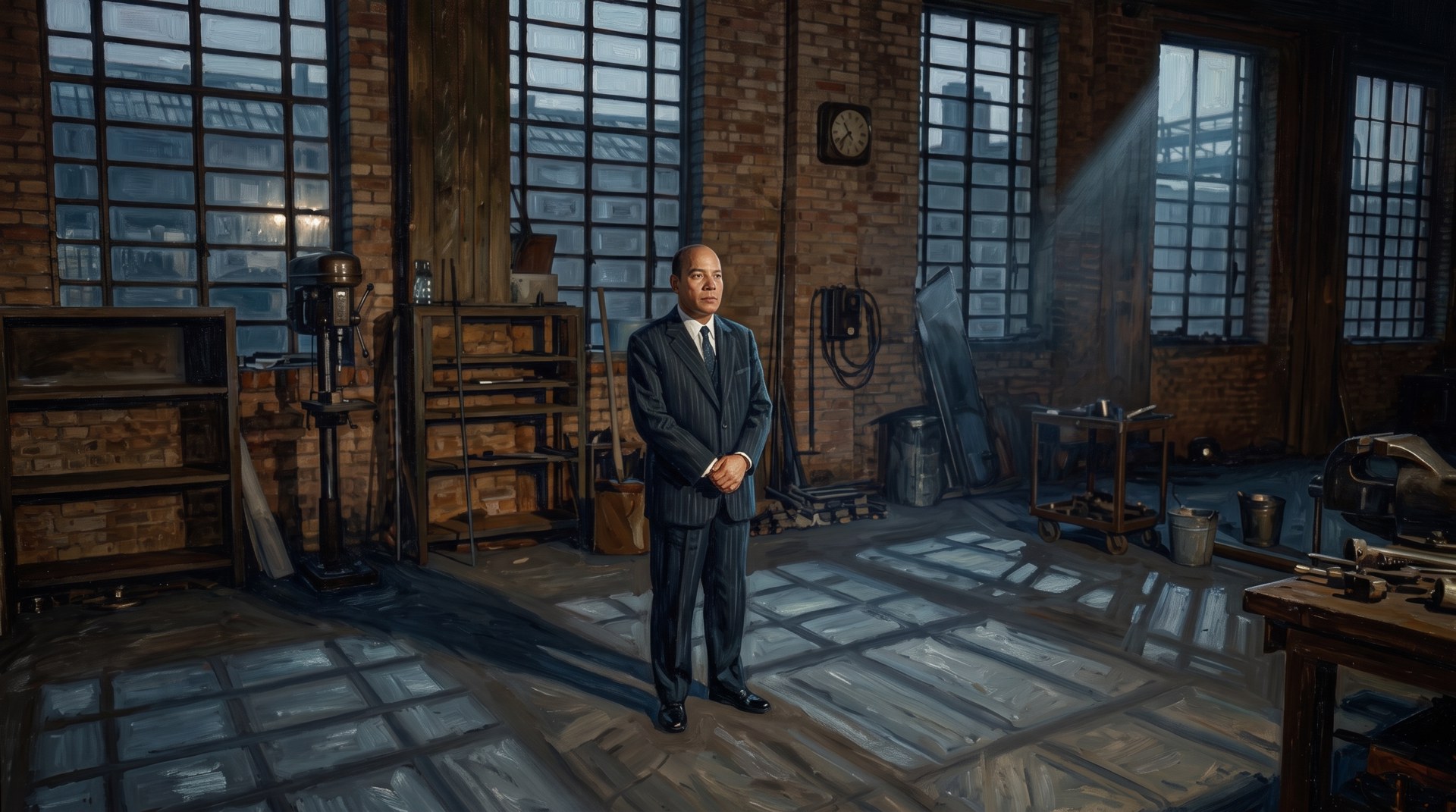
Gino Cenedese Murano Glass: The Ultimate Post-War Markings Guide
The Visionary Designers: A Collector's Guide
Gino Cenedese — The Visionary Administrator of Avant-Garde Collaborations
Artist Key: Gino Cenedese
- Role: Glassworks Founder / Administrative Director / Facilitator of Avant-Garde Design
- Life/Dates: Murano, 1907 – Murano, 1973
- Primary Furnaces/Associations: Maestri Vetrai Muranesi Cappellin & C. (Apprentice, 1925–1931) | Gino Cenedese S.r.l. (Founder-Director, 1946–1947) | Gino Cenedese & C. (1947–1950) | Vetreria Gino Cenedese (1950–1964) | Vetreria Artistica Cenedese (1964–1973) | Gino Cenedese & Figlio (Post-1973, posthumous continuation by his son Amelio)
- Signature Techniques: Scavo (Mineral-corroded excavation style) | Sommerso (Heavy cased block glass) | A Macchie (Tachisme-style pigment patching) | Alabastro Seta (Semi-opaque silky alabaster glass) | Vasi Polichromi a Filo (Light-blown vessels with hot-applied polychrome threads)
- Market Price Tier: High-End Investment Grade (specifically 1948–1950 Alfredo Barbini solid animal sculptures and nudes, 1952–1954 Fucina degli Angeli Picasso and Chagall collaborations, 1950s Napoleone Martinuzzi architectural panels, and 1960s Ermanno Nason masterworks designed by Antonio Da Ros) to Mid-Range (1950s Scavo and Sommerso vases, a macchie coffee-bean objects, and post-1959 Da Ros stylized animal figures)
- Key Collaborators: Alfredo Barbini | Napoleone Martinuzzi | Fulvio Bianconi | Riccardo Licata | Egidio Costantini (Fucina degli Angeli) | Marc Chagall | Luigi Scarpa Croce | Antonio Da Ros | Ermanno Nason | Harold Stevenson
Summary:
Discover the magnificent legacy and technical versatility of Gino Cenedese, Murano’s undisputed administrative titan of post-war avant-garde design. This expert collector's guide covers his career from his early apprentice years at M.V.M. Cappellin to his historic collaborations with Alfredo Barbini, Napoleone Martinuzzi, Fulvio Bianconi, and Egidio Costantini’s Fucina degli Angeli before appointing Antonio Da Ros as Artistic Director in 1958. Learn how to verify authentic diagnostic markers—including mirror-polished flat bases, cased sommerso boundaries, white "SN" trial paper labels, and his own flowing diamond-point engraved signatures—to confidently identify his creations, avoid cheap contemporary counterfeits, and discover investment-grade treasures.
Visual Career Timeline
              ┌──────────────────────────────────────────────────────────┐
              │                      GINO CENEDESE                       │
              │         - VISIONARY OF AVANT-GARDE COLLABORATIONS -       │
              └──────────────────────────┬───────────────────────────────┘
                                         │
     ┌───────┐                           ▼
     │ 1907  │ ──► Born in Murano; enters the glass industry as an apprentice.
     └───────┘                           │
     ┌───────┐                           ▼
     │1925-31│ ──► Trains as a glassblower at M.V.M. Cappellin & C.; transitions to administration.
     └───────┘                           │
     ┌───────┐                           ▼
     │ 1946  │ ──► Co-founds Gino Cenedese S.r.l. with Gino Fort, Pietro Scaramal, and Angelo Toso.
     └───────┘                           │
     ┌───────┐                           ▼
     │ 1947  │ ──► Reorganizes as Gino Cenedese & C.; brings in master Alfredo Barbini as a partner.
     └───────┘                           │
     │                                   ├─► Barbini acts as chief blower and artistic director.
     │                                   └─► Launches bold, solid-glass "a massello" sculptures.
     │                                   │
     ┌───────┐                           ▼
     │ 1950  │ ──► Barbini departs; Cenedese establishes the landmark "Scavo" technique.
     └───────┘                           │
     ┌───────┐                           ▼
     │1952-54│ ──► Collaborates with Egidio Costantini's Fucina degli Angeli; blows Chagall designs.
     └───────┘                           │
     ┌───────┐                           ▼
     │1953-58│ ──► Employs Napoleone Martinuzzi for monumental architectural bas-relief panels.
     └───────┘                           │
     ┌───────┐                           ▼
     │ 1958  │ ──► Appoints Antonio Da Ros as Artistic Director; shifts focus to heavy, cased sommerso.
     └───────┘                           │
     ┌───────┐                           ▼
     │ 1964  │ ──► Reorganizes as Vetreria Artistica Cenedese; hires gaffer Ermanno Nason.
     └───────┘                           │
     │                                   ├─► Nason translates Da Ros's designs into heavy sommerso blocks.
     │                                   └─► Executes monumental fine-art sculptures for Harold Stevenson (1968).
     │                                   │
     ┌───────┐                           ▼
     │ 1973  │ ──► Gino Cenedese passes away; son Amelio Cenedese takes over Cenedese & Figlio.
     └───────┘                           │
     ┌───────┐                           ▼
     │ 1993  │ ──► Posthumous Expansion: Cenedese acquires the brand and goodwill of Seguso Vetri d'Arte.
     └───────┘
1. The Legend & Legacy: The Great Curator of the Kiln
In the history of post-war Murano glass, Gino Cenedese occupies a highly unique, transitional position. Unlike many of his contemporary furnace owners, such as Archimede Seguso or Alfredo Barbini, who were legendary master glassblowers first and foremost, Cenedese’s genius was primarily administrative, curatorial, and entrepreneurial. Born in Murano in 1907, he did not lack practical experience; he underwent rigorous early training as a glassblower at Giacomo Cappellin's celebrated Maestri Vetrai Muranesi Cappellin & C. from 1925 to 1931. However, following the collapse of Cappellin's firm, Cenedese recognized that his true strength lay not in holding the blowing iron, but in directing the complex human, artistic, and financial networks required to run a globally dominant modern art glass furnace.
In 1946, sensing the explosive creative and commercial energy of post-war reconstruction, Cenedese partnered with master blower Gino Fort, Pietro Scaramal, Angelo Tosi, and Edgardo Valmarana to establish Gino Cenedese S.r.l. at Fondamenta Venier 48. Cenedese’s core philosophy was simple yet revolutionary: he treated his furnace not as a workshop bound to a single artistic style, but as an open, fluid, and highly experimental laboratory. He invited the most radical designers and painters of the twentieth century to the workbench, providing them with Murano’s absolute premier master glassblowers and leaving those blowers completely free to experiment.
Cenedese’s first major coup occurred in 1947, when he reorganized the firm as Gino Cenedese & C. and brought in the young, muscular gaffer Alfredo Barbini as a partner and Artistic Director. Together, they bypassed the traditional, lightweight blown tablewares of their competitors to pioneer massive, hand-sculpted solid-glass figures (a massello) that dominated the 1948 and 1950 Venice Biennales. When Barbini departed in 1950 to open his own independent studio, Cenedese did not falter; instead, he initiated a spectacular series of design collaborations that defined the avant-garde "mid-century look".
Throughout the 1950s, Cenedese’s kiln executed legendary commissions:
- He partnered with Egidio Costantini’s Fucina degli Angeli from 1952 to 1954, physically executing the surrealist glass designs of Marc Chagall, Pablo Picasso, Jean Cocteau, and Alexander Calder.
- He commissioned Napoleone Martinuzzi from 1953 to 1958 to design monumental, sculptural glass tiles and figural bas-relief panels for modern architectural spaces.
- He collaborated with painter Riccardo Licata to develop heavy, block-like abstract "aquariums" with embedded, carved faces that pushed glass toward modern fine art.
- He worked with the brilliant Fulvio Bianconi from 1954 to 1958, producing a whimsical series of cased vessels with spontaneous, hand-applied figurative thread details.
In late 1958, Cenedese appointed a young, visionary graduate of the Venice Istituto d'Arte, Antonio Da Ros, as the firm's permanent Artistic Director. This partnership lasted for decades and defined Cenedese's post-war identity through the masterly execution of the multi-layered sommerso technique, producing his famous Sassi (pebbles), Contrappunti, and stylized, heavy-walled animal figures.
To execute these monumental Da Ros designs, Cenedese hired the ultimate virtuoso of hot solid-glass modeling, Ermanno Nason, who served as the firm’s first master blower (maestro) from 1964 until 1972. This legendary union led to the creation of monumental, cased, and acid-etched fine-art sculptures, including joint collaborations with the American painter Harold Stevenson during the late 1960s.
Gino Cenedese remained at the helm of his artistic empire until his passing in 1973, when ownership passed to his son, Amelio Cenedese, who reorganized the firm as Gino Cenedese & Figlio. In a final, poetic testament to his legacy, the Cenedese company acquired the prestigious name, brand, and goodwill of Seguso Vetri d'Arte in 1993, uniting two of Murano’s greatest post-war dynasties under one administrative banner.
2. Advanced Geometries of Cenedese Techniques
Gino Cenedese's furnace was defined by an extraordinary technical versatility, pioneering several highly complex interwar and post-war kiln techniques:
- The Archaeological Scavo Reform (c. 1950): Cenedese was Murano's premier post-war pioneer of the Scavo technique. Seeking to replicate the weathered, encrusted, and chemically calcified surface of Roman, Phoenician, and Etruscan glass excavated from archaeological digs, Cenedese developed a highly specialized chemical powder mixture. While the blown glass vessel was white-hot, it was rolled in a calculated mixture of pulverized carbonates, silica, and metallic salts. When heated at the furnace mouth, these minerals partially fused and chemically reacted with the glass parison, creating an irregular, matte, and highly textured crust. Cenedese often finished these works using hydrofluoric acid baths to further corrode the surface glare, producing archaic, non-reflective vessels of extraordinary historical weight.
- Submerged Monolithic Mass (Sommerso): Sommerso was the absolute signature of Cenedese's 1960s production under Antonio Da Ros and Ermanno Nason. Unlike standard sommerso, which cased thin colored bubbles, Cenedese’s masters manipulated massive, thick-walled solid gathers weighing up to fifty pounds. A core of highly saturated glass—such as an emerald green, alexandrite purple, or uranium yellow—was gathered and allowed to cool slightly. It was then submerged into a second, third, and sometimes fourth crucible containing contrasting transparent colored glass batches. The gaffer then hand-modeled the molten block using heavy wooden paddles and shears, maintaining absolute, razor-sharp color boundaries between the submerged layers without any internal bleeding or trapped air bubbles.
- The Tachisme "A Macchie" Series (c. 1955): A highly experimental, trial-production series inspired by post-war abstract expressionist and Tachisme painting. These vessels were blown from a base of clear crystal cased over an inner layer of dense, opaque white lattimo glass. While the parison was white-hot, the master blower applied large, irregular, and overlapping patches of colored glass powders and pigments in cobalt blue, yellow, lavender, and black. The vessel was then inflated into a dip-mold and tooled, with the glass wall notched, pinched, and pushed back together again to form irregular, organic coffee-bean or organomorphic shapes of dramatic tactile value.
- Alabastro "Seta" (Seta Alabaster): Developed primarily by Ermanno Nason during his Cenedese tenure in the late 1960s. This was a highly specialized, semi-opaque glass matrix that mimicked the soft, translucent, and fibrous texture of carved alabaster stone. By carefully controlling the cooling rate of a highly saturated, white lattimo and lead-arsenate glass batch, Nason induced microscopic crystalline precipitation within the glass wall. The resulting glass possessed a soft, silky interior sheen (seta) that diffused light beautifully, which Nason frequently combined with burnt gold and silver leaf for his neoclassical and biblical figures.
- Vasi Polichromi a Filo (c. 1952): Designed by the painter Luigi Scarpa Croce, these paper-thin, transparent blown vases were decorated with thin, hand-applied polychrome glass threads wrapping around the vessel in organic loops, mimicking the gestural paint drips of Jackson Pollock.
3. The Avant-Garde Collaborations: The Fucina degli Angeli & Fine Art
Gino Cenedese’s furnace was the primary physical engine for some of the twentieth century's most celebrated fine-art collaborations. He was a convinced proponent of the artistic potential of glass, actively encouraging his masters to break traditional tableware rules:
- The Fucina degli Angeli (1952–1954): Founded by Egidio Costantini, the "Forge of the Angels" sought to elevate glass to a fine art by having Murano's premier masters execute drawings supplied by the world's leading avant-garde painters. Cenedese committed his primary master glassblowers, including Gino Fort, to this project.
- The Chagall Fusions: In 1954, Cenedese’s blowers successfully executed a series of plates and vases designed by Marc Chagall, featuring dreamlike, floating figures and biblical narratives rendered as delicate, hot-applied glass threads and colored powder fusions.
- The Harold Stevenson Monoliths (1968–1969): In June 1968, the American painter Harold Stevenson partnered with Gino Cenedese to create a series of colossal, solid-glass sculptures. Executed by master Ermanno Nason, these works pushed the physical boundaries of hot glass modeling.
- The Technical Challenge: Stevenson designed towering, totemic monoliths (including a giant 40 kg ox for a Saint Mark's Square Christmas Crib in 1969) that required Nason to fuse massive, solid blocks of molten glass weighing dozens of pounds. The resulting works were exhibited in 1969 at the Palazzo Genovese in Venice and subsequently traveled to the legendary Iris Clert Gallery in Paris, representing a high-water mark of post-war conceptual glass sculpture.
- Napoleone Martinuzzi’s Architectural Bas-Reliefs (1953–1958): Martinuzzi designed a series of highly stylized, solid-glass female figures and monumental bas-relief tiles for Cenedese. These thick, heavily textured panels utilized colored pasta vitrea and pulegoso glass, serving as modern architectural dividers and wall reliefs that integrated glass directly into post-war Italian reconstruction projects.
4. The Antonio Da Ros Era: Sommerso, Sassi, and the Chunky Bestiary
In late 1958, the arrival of Antonio Da Ros as Artistic Director permanently solidified Cenedese’s modern identity. Da Ros’s designs were characterized by a highly sophisticated, minimalist geometry that contrasted sharply with the complex patchwork of Dino Martens or the thin-walled historicism of Zecchin:
- The Sommerso Geometries: Da Ros designed elegant, heavy-walled vessels—such as flattened, narrow quadrangular vases with splayed rims and raised points—cased in multiple thick layers of contrasting transparent colors (such as deep amber cased in cobalt blue, or alexandrite violet cased in emerald green). These pieces relied on the absolute, "northern" geometric perfection of the form to create complex optical refractions.
- The Sassi (Pebbles) Series: Designed in the early 1960s, these abstract, solid-glass block sculptures resemble smooth, water-worn river pebbles. Blown and hand-tooled from heavy, multi-layered transparent glass, they contain internal, organic color bands and gold-leaf inclusions that seem to float weightlessly inside the clear crystal mass, simulating fossilized or mineral layers.
- The Chunky Bestiary: Beginning in the 1960s, Da Ros designed a highly celebrated series of stylized animals featuring a "chunky round" aesthetic. Executed by Ermanno Nason, these figures—including stylized seals, kangaroos, buffaloes, little owls, mammoths, and boars—were sculpted using the solid a massello technique. Rather than presenting realistic details, the animals were reduced to smooth, volumetric, and playful silhouettes cased in heavy layers of transparent green, uranium yellow, and smoky grey sommerso glass.
5. Famous Collaborations
Though Gino directed the company’s business, his furnace was a theater of supreme manual collaboration:
- Alfredo Barbini: As partner and chief gaffer from 1947 to 1950, Barbini was the primary force who developed Cenedese's initial reputation for monumental, solid hot-glass modeling, executing his famous corroded hands and solid nudes before leaving to open his own kiln.
- Antonio Da Ros & Ermanno Nason: The ultimate designer-blower partnership of Cenedese's late golden era. Da Ros designed strictly on paper; Nason translated those sketches into physical form with a single glance. Nason’s extreme speed and technical command over thermal tension enabled the furnace to execute Da Ros's massive, multi-layered sommerso blocks and stylized chunky animal figures flawlessly.
- Egidio Costantini: Partnering with Cenedese in the early 1950s, Costantini acted as the intellectual bridge, bringing drawings by Picasso and Chagall directly to Cenedese's gaffers.
6. The Collector's Diagnostic Checklist & Market Realities
- Analyzing Pontil Finishing & Base Polishing: Authentic, vintage Gino Cenedese glassware is characterized by its meticulous, mirror-polished flat bases. The pontil scar must be completely ground flat and polished to a flawless finish. Beware of pieces carrying rough, jagged, or only partially ground pontil scars. The Ermanno Nason Exception: In the first years of Nason's independent workshop (Vetraria Arte E. Nason, post-1972), he occasionally continued to blow his original Cenedese designs; these later, independent productions often feature a slightly rougher, partially unpolished base finish.
- Evaluating Sommerso Layering and Clarity: On Da Ros’s cased sommerso vessels and animal sculptures, the boundaries between the colored cased layers must be perfectly sharp, uniform, and free of color bleeding. The outer clear crystal sheath must display an exceptional, limpid clarity, showing zero seed bubbles, soot, or furnace debris.
- Verifying Scavo and Corroso Surface Textures: In Cenedese's Scavo series, the mineral encrustation must appear chemically fused and integrated into the glass wall. It should feel highly tactile, rough, and organic, showing varying greyish-yellow and white calcified tones. Beware of modern repetitions where a uniform frosted surface is simulated using cheap, modern sandblasting, which produces a powdery white finish that scratches off easily and lacks the mineral depths of a hot chemical application.
- The Price Tiers:
- High-End Investment Grade: Original 1947–1950 solid-glass a massello sculptures, corroded hands, and nudes physically blown by Alfredo Barbini; 1952–1954 Fucina degli Angeli pieces co-signed by Costantini; and 1960s Ermanno Nason-executed Sassi and Apollo del Belvedere sculptures.
- Mid-Range: Post-1959 Antonio Da Ros cased sommerso geometric vases; a macchie spotted coffee-bean objects; and original 1960s chunky animal figures.
- Accessible: 1950s standard Scavo utilitarian wares, small post-war bowls with applied colored threads, and late-era signed production paperweights and ashtrays.
7. Forensic Chronology of Factory Markings (1946–1973)
Because Gino Cenedese operated across several highly distinct corporate restructurings, collectors and curators must verify his work using a strict, chronologically mapped sequence of paper labels, decals, and engraved signatures:
I. The Gino Cenedese S.r.l. / Gino Cenedese & C. Era (1946–1950)
- The Unsigned Wares: Standard utilitarian production from these founding years was typically unsigned and un-stamped.
- The Barbini Hand-Engraved Signatures: High-art solid-glass sculptures and nudes physically executed by Alfredo Barbini during his brief partnership tenure carry a delicate, hand-guided diamond-point engraved cursive signature on the ground base reading:
CenedeseorA. Barbini per Cenedese. - The Earliest Paper Label: Standard pieces occasionally carry a rectangular paper sticker on the underside of the base ring reading:
CENEDESE GLASS / MURANO / MADE IN ITALYprinted in black block capital letters.
II. The Vetreria Gino Cenedese Era (1950–1964)
- The Showroom Label & Trial Codes: Standard production wares from this highly creative decade carry a rectangular paper label with a thin, double-lined black border reading:
CENEDESE GLASS / MURANO / MADE IN ITALY.- The "SN" and "SA" Codes: On trial pieces, unique prototypes, or exhibition-only wares, the paper labels are marked with handwritten codes in black ink:
SN(representing Senza Numero / without number) orSA. These codes represent a definitive, historically verified marking for Cenedese’s mid-century trial series.
- The "SN" and "SA" Codes: On trial pieces, unique prototypes, or exhibition-only wares, the paper labels are marked with handwritten codes in black ink:
III. The Vetreria Artistica Cenedese Era (1964–1973)
Following the firm's reorganization, several distinct markings were utilized on Da Ros’s and Nason's bench executions:
- The Diamond-Point Base Signatures: Highly diagnostic, hand-guided diamond-point base signatures were introduced for high-art sculptures, reading:
CenedeseorG. Cenedese Murano. - The Silver Foil Triangular Sticker: Exhibition-grade pieces carry a triangular metallic foil sticker with a silver or gold border reading:
MURANO CENEDESE VETRI. - Posthumous Cenedese & Figlio Wares (Post-1973): Creations produced after Gino Cenedese’s death in 1973 carry the engraved signature
G. Cenedese & FiglioorCenedese, often accompanied by a modernized showroom tag.
8. Attribution & Authenticity
In the Murano glassmaking tradition, the difference between a fake and a copy rests entirely on intent, origin, and transparent attribution. A fake is a deceptive counterfeit manufactured outside of Murano—often in mass production factories in Asia or Eastern Europe—that utilizes cheap materials and carries forged signatures or illicit trademark stickers to intentionally defraud collectors. Conversely, a copy is a legitimate artistic homage (omaggio) handcrafted by a skilled master using authentic Murano techniques and materials; it serves as a tribute to honor a legendary artisan's legacy and is openly signed by the modern creator, preserving the lineage of Venetian glassblowing rather than exploiting it.
Join Our Facebook Group Identify Your Murano - Murano Glass Animals