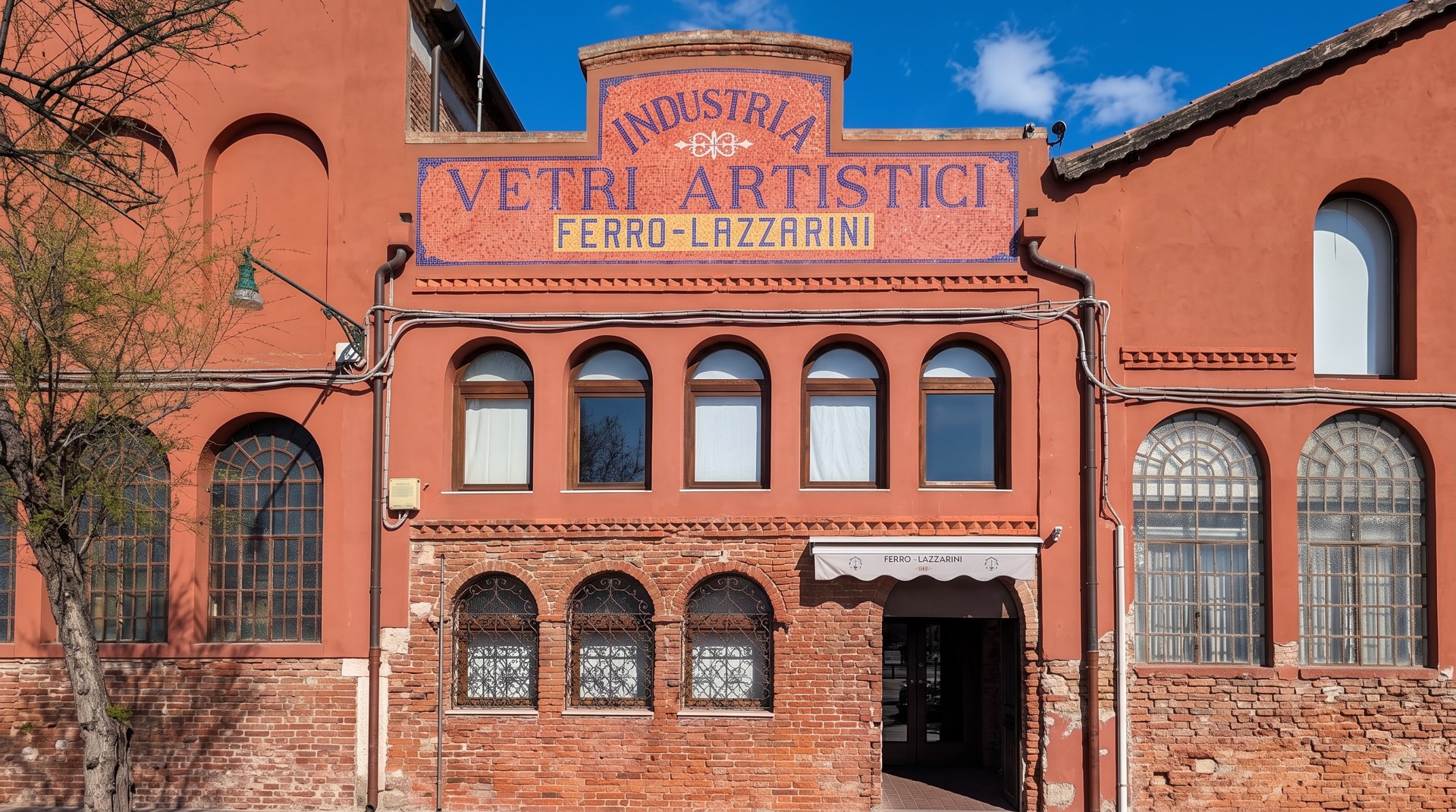
The Ferro Dynasty: Masters of AVEM, Anse Volanti & Galliano Ferro Glass
The Ferro Dynasty — Masters of Bench Virtuosity, Kiln Engineering, and the Great A.V.E.M. Split
Dynasty Key: The Ferro Dynasty
- Active Dynasty Window: 14th Century – Present (documented across seven centuries of master glassmakers, furnace directors, bench virtuosos, and kiln engineers on Murano)
- Ancestral Seat & Primary Kilns: Fondamenta Vetrai 33 (Arte Vetraria Muranese - A.V.E.M., 1932–1970s) | Fondamenta Vetrai 106 (Vetreria Artistica Galliano Ferro, 1955–Present) | Fondamenta da Mula (Vetreria Ferro-Lazzarini, 1928/1937–Present) | Cannaregio, Venice & Murano (Effetre International, 1960/1976)
- Hereditary Master Gaffers, Directors & Kiln Engineers: Florian Ferro ("Furian", 19th c. master) | Ferdinando Ferro (1880 founder of Francesco Ferro & Figlio) | Antonio Luigi Ferro ("Barba Gigi", 1887–1940) | Egidio Ferro ("Pianzini", 1889–1968) | Galliano Ferro (1896–1973) | Ottone Ferro | Luigi Olimpio Ferro (1898–1983) | Luciano Ferro (1925–1972) | Giorgio Ferro (1931–2018) | Giovanni Ferro ("Nane Catare", 1910–1988) | Vittorio Ferro ("Nane Catare", 1925–2012) | Eduino Ferro (1885–1965) | Elia Ferro (b. 1910) | Giulio Ferro | Ada Ferro (1921–2000) | Americo Ferro | Guido Ferro | Ivano Ferro | Mario Ferro | Lisa Ferro
- Signature Technical & Material Inventions: Anse Volanti / Flying Handles (Giorgio Ferro at A.V.E.M., XXVI Venice Biennale, 1952) | Arcobaleno, Occhi, and Transennati Micro-Mosaic Casing (Luciano Ferro & Anzolo Fuga at A.V.E.M., 1955–1968) | Corinto Polychrome Flecked Vessels (Ferdinando Ferro, 1880s) | Intarsio and Complex Zanfirico Filigree Weaves (Vittorio Ferro "Nane Catare") | Monumental Cased Murrine & Sculptural Hot-Shaping (Galliano & Giorgio Ferro) | Massello Sculptural Casting for Fucina degli Angeli (Ferro-Lazzarini)
- Market Price Tier: High-End Investment Grade (1952 Giorgio Ferro Anse Volanti metallic iridescent vases, 1950s–1960s Luciano Ferro / Anzolo Fuga A.V.E.M. Occhi, Arcobaleno, and Folclore Ellenico vessels, and 1950s Vetreria Galliano Ferro cased art glass) to Mid-Range (Vittorio Ferro zanfirico/murrine vessels, Effetre International studio glass, and Ferro-Lazzarini sculptures) to Accessible (commercial millefiori, paperweights, and modern production lighting)
- Key Collaborators: Giulio Radi | Anzolo Fuga | Emilio Nason | Aldo Nason | Lino Tagliapietra | Egidio Costantini (Fucina degli Angeli) | Yoichi Ohira | Fulvio Bianconi | Ercole Barovier | Napoleone Barovier | Antonio Seguso ("Toni Patare") | Archimede Seguso
Summary:
Discover the magnificent seven-century history and bench virtuosity of The Ferro Dynasty, Murano's foundational family of master blowers, furnace directors, and kiln engineers. This comprehensive collector's guide details their 19th-century revival under Florian Ferro, the 1932 founding of Arte Vetraria Muranese (A.V.E.M.), Giorgio Ferro's iconic 1952 Anse Volanti (Flying Handles), the 1955 founding of Vetreria Artistica Galliano Ferro, and Luciano Ferro's collaborations with Anzolo Fuga. Learn how to evaluate diagnostic markers, paper factory decals, and market valuations to collect Ferro glass with absolute curatorial confidence.
Genealogical Lineage Map
┌────────────────────────────────────────────────────────────────────────┐
│                         THE FERRO DYNASTY                              │
│                   - ANCESTRY & GENEALOGICAL DESCENT -                  │
└───────────────────────────────────┬────────────────────────────────────┘
                                    │
                              Florian Ferro
                 ("Furian" - 19th C. Renaissance Revival)
                                    │
                           Francesco & Ferdinando
                    (1880: Francesco Ferro & Figlio)
                                    │
             ┌──────────────────────┴──────────────────────┐
             │                                             │
    Antonio Luigi Ferro                             Luigi Olimpio Ferro
      ("Barba Gigi")                             (Co-Founder 1933 BS&F;
   (Co-Founder 1932 A.V.E.M.)                          1937 V.A.M.S.A.)
             │                                             │
     ┌───────┼──────────────┬──────────────┐               │
     │       │              │              │               │
  Egidio  Ottone         Galliano         Ada           Eduino
("Pianzini")          (1955 Founder  (Proprietor)    (1934 Chicago)
 (Director)          Galliano Ferro)                       │
     │                      │                              │
  Luciano                Giorgio                      Elia Ferro
 (Master Gaffer,       (1952 Anse                  (Lampwork Pioneer;
 Fuga Exec)            Volanti)                     Gambaro & Poggi)
                            │
                     Giovanni & Vittorio
                     ("Nane Catare" Masters)
1. The Medieval Foundations & 19th-Century Revival
The Ferro lineage represents one of Murano's most enduring, structurally ubiquitous, and technically formidable glassmaking dynasties. Recorded in municipal archives and the noble Libro d'Oro since the 14th century, the Ferro name has been continuously intertwined with the bench virtuosity, furnace engineering, and corporate leadership of the Venetian lagoon.
Following the fall of the Venetian Republic in 1797 and the subsequent collapse of the ancient guild structures, the Ferro family emerged as pivotal leaders of Murano's 19th-century industrial renaissance. The modern history of the dynasty opened with Florian Ferro (universally known on Murano as "Furian"). In 1869, Florian Ferro partnered with Giovanni Nason to establish Vetreria Ferro Floriano, Nason Giovanni & C. at Fondamenta Vetrai. Furian was celebrated for recovering the complex hot-working techniques of XV and XVI century Renaissance stemware, specializing in ultra-light blown soffiati, dragon-stem goblets, and enameled filigree (zanfirico).
In 1880, Ferdinando Ferro expanded the family's industrial footing by founding Francesco Ferro & Figlio at Fondamenta Vetrai. Ferdinando established an elite reputation for technical innovation, developing the proprietary Corinto line—vessels featuring polychrome aventurine and opaque glass flecks cased within transparent bodies. At the landmark 1881 Milan Industrial Exhibition and the 1888 Treviso Exhibition, Francesco Ferro & Figlio was awarded Gold Medals for its historicist filigree, enameled wares, and advanced batch compositions, establishing the family as one of the premier export kilns of the late 19th century.
2. The Interwar Foundations & The Birth of A.V.E.M. (1932–1937)
By the early 20th century, the second generation of the modern Ferro lineage took firm command of Murano's premier furnace floors, establishing key corporate alliances that shaped 20th-century Italian art glass.
The Secession from Rioda & The Founding of A.V.E.M. (1932)
In the early interwar period, Antonio Luigi Ferro (1887–1940), affectionately known across the island as "Barba Gigi," served as furnace director at the famous workshop of Successori Andrea Rioda. Following strategic disagreements regarding furnace management and artistic direction, Barba Gigi organized a historic secession.
On January 18, 1932, Antonio Luigi Ferro, together with his sons Egidio Ferro (1889–1968, known as "Pianzini") and Ottone Ferro, joined master glassmakers Galliano Ferro (1896–1973), Emilio Nason, and chemist-designer Giulio Radi to establish Arte Vetraria Muranese (A.V.E.M.) at Fondamenta Vetrai 33. Barba Gigi assumed administrative management, while Egidio Pianzini Ferro served as furnace manager, creating a powerhouse cooperative furnace owned and operated entirely by master craftsmen.
Barovier Seguso & Ferro (1933–1937)
Concurrently, another prominent branch of the family spearheaded the creation of another legendary furnace. In 1933, Luigi Olimpio Ferro (1898–1983) joined forces with master glassblowers Napoleone Barovier, Antonio Seguso ("Toni Patare"), and the young Archimede Seguso to found Barovier Seguso & Ferro at the historic Salviati furnace premises. Luigi Olimpio Ferro managed corporate operations and international trade for the firm until 1937, when internal restructuring led him to depart and co-found V.A.M.S.A. (Vetreria Artistica Muranese Società Anonima), where he pioneered heavy massello solid-glass sculpting alongside Alfredo Barbini.
3. Mid-Century Modern Virtuosity & The Galliano Ferro Secession (1950s–1970s)
During the post-war era, A.V.E.M. reached the absolute zenith of international acclaim, driven largely by the extraordinary design vision and bench virtuosity of the Ferro family.
Giorgio Ferro & The Iconic Anse Volanti (1952)
In 1952, Galliano Ferro’s son, Giorgio Ferro (1931–2018), assumed artistic direction at A.V.E.M. At the landmark XXVI Venice Biennale in 1952, Giorgio Ferro debuted one of the supreme masterpieces of 20th-century art glass: the Anse Volanti (Flying Handles) collection.
Executing these vessels required unprecedented physical strength and bench control. Blown from thick, heavy dark iridescent glass (amber, iridescent amethyst, and deep green treated with metallic reduction fumes), the vessels featured monumental, sculptural handles that were drawn hot directly from the vessel body, looped through the air in sweeping parabolic arcs, and re-attached to the shoulder. The Anse Volanti captured international critical acclaim, winning immediate acquisition by major modern art museums and cementing A.V.E.M.'s reputation for avant-garde sculpting.
The Secession of Vetreria Artistica Galliano Ferro (1955)
Despite A.V.E.M.'s international success, creative and commercial tensions led Galliano Ferro and his son Giorgio Ferro to secede from A.V.E.M. in 1955 to establish their own independent glassworks: Vetreria Artistica Galliano Ferro at Fondamenta Vetrai 106.
Galliano and Giorgio assembled an elite furnace team, including master blowers Giovanni Ferro (1910–1988) and Vittorio Ferro (1925–2012), both known by the bench moniker "Nane Catare." Between 1956 and 1966, Galliano Ferro's furnace became an essential training ground for the young Lino Tagliapietra, who earned his title of Maestro at the Galliano Ferro bench under the tutelage of Giovanni Nane Catare Ferro.
Luciano Ferro, Anzolo Fuga, and Ada Ferro at A.V.E.M.
Following Galliano Ferro's departure in 1955, leadership of A.V.E.M. remained firmly in the hands of Egidio Pianzini Ferro's branch. Egidio's son, Luciano Ferro (1925–1972), served as chief master glassblower, forming a historic creative partnership with painter-designer Anzolo Fuga (1915–1998).
Working directly at the glory hole, Luciano Ferro translated Fuga's complex, spontaneous watercolor sketches into glass masterpieces:
- Arcobaleno and Impronte (1956): Vessels featuring asymmetric, sweeping bands of opaque colored glass cased over silver leaf.
- The Occhi Series (1959–1962): Heavy vessels clad in dense, overlapping matrices of large, clear-centered murrine resembling eyes.
- Transennati and Folclore Ellenico (1962–1966): Intricate grid-like compositions of fused cane lattice exhibited at the 1966 Venice Biennale.
Following Luciano Ferro's premature death in 1972, his sister Ada Ferro (1921–2000) assumed sole ownership and administrative direction of A.V.E.M. Ada preserved the factory's historic archives, molds, and unreleased prototype collections at Fondamenta Vetrai 33 until her passing in 2000.
4. Specialized Branches: Technical Kilns, Torchworking & Modern Global Impact
Beyond A.V.E.M. and Galliano Ferro, specialized branches of the Ferro family made foundational contributions to glass engineering, fine art casting, and international studio glass:
- Eduino & Elia Ferro (Torchworking Pioneers): Master Eduino Ferro (1885–1965) served as chief master blower for Pauly & C., executing monumental historicist glasswork for the 1934 Chicago World's Fair. His daughter, Elia Ferro (b. 1910), was a legendary female pioneer in lampworking (a lume), touring North America in the 1950s demonstrating micro-mosaic bead making. Her descendants co-founded the celebrated Gambaro & Poggi furnace in 1974.
- Vetreria Ferro-Lazzarini (Fondamenta da Mula): Founded around 1928 by Eugenio Mario Ferro (Giacomello branch) as Eugenio Ferro & C. and reorganized in 1937 with Giovanni Lazzarini at Fondamenta da Mula. Ferro-Lazzarini became the premier technical casting furnace for Egidio Costantini's Fucina degli Angeli, executing heavy, solid-glass massello sculptures designed by global modern masters including Alexander Calder, Le Corbusier, Oskar Kokoschka, and Jean Cocteau.
- Effetre International & Lino Tagliapietra (1960/1976): Founded by Americo Ferro's sons (Guido, Ivano, and Mario Ferro), Effetre International became a global leader in cane manufacturing and high-art studio glass. In 1977, the Ferro brothers appointed Lino Tagliapietra as Artistic Director, establishing a historic technical bridge between Murano and the American Studio Glass movement.
- Vittorio Ferro "Nane Catare" (1925–2012): One of 20th-century Murano's most revered bench masters, Vittorio Ferro worked at Galliano Ferro and Fratelli Toso before becoming an independent master. He was celebrated globally for executing complex zanfirico filigree weaves and micro-murrine vessels for Japanese designer Yoichi Ohira (e.g., the Ashanti and Goffrato series).
5. Comprehensive Forensic Master Registry of Base Markings, Paper Labels & Decals
Because masters of the Ferro family rarely applied hand-engraved signatures during mid-century production, verifying paper labels, factory tags, importer decals, export stickers, and acid stencils categorized by specific Furnace, Master, and Era is critical for authentication:
I. 19th-Century & Early Interwar Kilns (1869–1920s)
- Vetreria Ferro Floriano, Nason Giovanni & C. (1869–1880s): Unsigned production. Hand-annotated paper tags reading
Vetreria Ferro Floriano / Murano. - Francesco Ferro & Figlio (1880–1900s): Unsigned. Exhibition tags reading
Francesco Ferro & Figlio / Muranoused for award displays at the 1881 Milan and 1888 Treviso exhibitions. - Ferro Toso & C. (1900s–1920s): Hand-written catalog tags reading
Ferro Toso & C. / Muranoor retailer paper stickers from Pauly & C. and C.V.M. on wheel-engraved stemware.
II. Interwar Cooperative Alliances (1933–1940s)
- Barovier Seguso & Ferro (1933–1937):
- Paper Label: White rectangular paper label reading
A.S.V. BAROVIER SEGUSO & FERRO / MURANOwith handwritten model numbers (e.g.,21642,L.84). - Acid Stamp: Two-line acid stencil reading
MADE IN ITALYetched onto the base ring (introduced in 1936 following international trade regulations). - Retailer Overlays: Pauly & C. serrated paper stamps overlaid on factory labels, carrying internal inventory codes
FP(Fuori produzione / discontinued) andNR(Non ripetibile / unique execution).
- Paper Label: White rectangular paper label reading
- V.A.M.S.A. (Luigi Olimpio Ferro, 1937–1940s): Two-line acid stencil reading
V.A.M.S.A. / MURANOor rectangular paper factory tag applied to heavy massello animal sculptures.
III. Arte Vetraria Muranese (A.V.E.M., 1932–1970s)
- Rectangular Factory Paper Decal: White rectangular paper sticker with a blue or black printed border reading
A.V.E.M. / ARTE VETRARIA MURANESE / MURANOwith handwritten model inventory codes (8000 and 15000 series) written in blue ink. - Globe Foil Export Decal: Circular silver or gold foil label featuring a stylized terrestrial globe surrounded by
A.V.E.M. / MADE IN ITALY / MURANO. - Rare Enamel Exhibition Mark (Anzolo Fuga & Luciano Ferro): On select museum-tier exhibition pieces executed for Fondazione Bevilacqua La Masa, an enamel base signature featuring a lightning bolt beside the capital letters "F F".
- Anti-Counterfeiting Base Signature Rule: Mid-century A.V.E.M. production pieces were NEVER signed with diamond-point script or flexible-shaft dental drills. Any base script reading "A.V.E.M." or "Luciano Ferro" applied to 1950s/1960s glass is a modern forgery.
IV. Vetreria Artistica Galliano Ferro (1955–Present)
- Heraldic Shield Foil Label: Gold or silver foil decal shaped like a heraldic shield reading
VETRERIA ARTISTICA GALLIANO FERRO / MURANO MADE IN ITALYsurrounding a central furnace icon. - Rooster / Gallo Export Label (Code AF): Round paper/foil export sticker featuring a stylized rooster (Gallo) stamped with code
AF(official consortium code for Galliano Ferro at Fondamenta Vetrai 106). - Modern Diamond-Point Base Script (Post-1980): Fine hand-engraved cursive script reading
Galliano Ferro / MuranoorG. Ferroon modern production and re-editions.
V. Specialized Technical Kilns & Torchworking Lineages
- Vetreria Ferro-Lazzarini (Eugenio Mario Ferro / 1937–Present):
- Paper Label: Oval or rectangular sticker reading
FERRO-LAZZARINI / MURANO. - Fucina degli Angeli Marks: Paired with Egidio Costantini's etched
Fucina degli Angelimark and the collaborating artist's etched signature (e.g., Alexander Calder, Le Corbusier, Oskar Kokoschka, Jean Cocteau). - Rooster / Gallo Export Label (Code AS): Stamped with export consortium code
AS(Fondamenta da Mula).
- Paper Label: Oval or rectangular sticker reading
- Effetre International / Effetre Murano (Guido, Ivano & Mario Ferro / 1960–Present): Rectangular paper label
Effetre International / Muranoor diamond-point signatureLino Tagliapietra / Effetre. - Gambaro & Poggi / Gambaro & Tagliapietra (Elia Ferro Descendants / 1974–Present): Black/gold foil factory label
Vetreria Artistica Gambaro & Poggi / Muranoor cursive diamond-point base scriptGambaro & Poggi/Gambaro M. Murano.
VI. Consortium & Regional Trademark Systems (VM vs. VAM Forensic Codes)
In Murano glass collecting, distinguishing between the late 20th-century Consorzio Vetri Murano (VM) label system and the modern Vetro Artistico® Murano (VAM) regional system (Veneto Regional Law No. 70/94) is critical. Below is the comprehensive forensic analysis detailing exactly how and why every consortium code connects to the genealogical branches, furnaces, and master glassmakers of the Ferro Dynasty across both era systems:
1. The Vetri Murano (VM) Consortium System (1980s–2001)
Label Style: Square white paper sticker with a black border reading vetri / vm / murano and a vertical 3-digit numerical code.
- VM Code 007 — Barovier & Toso:
- Dynastic Link: Interwar corporate alliance & genealogical intermarriage.
- Ferro Connection: In the late 19th century, Lorenza Ferro married into the Francesco Ferro line. In the 1920s, the families operated Ferro Toso & C., and in 1933, Luigi Olimpio Ferro (1898–1983) co-founded Barovier Seguso & Ferro at the Salviati furnace premises alongside Napoleone Barovier, Antonio Seguso, and Archimede Seguso. Luigi Olimpio managed corporate operations and international trade for the firm until 1937.
- VM Code 009 & VM Code 039 — Gambaro & Poggi:
- Dynastic Link: Lampworking lineage of Eduino & Elia Ferro.
- Ferro Connection: Founded in 1974 by Mario Gambaro and Luciano Poggi at Fondamenta Vetrai 10. Mario Gambaro's maternal lineage traces directly back to Elia Ferro (b. 1910), daughter of master blower Eduino Ferro (1885–1965, chief master blower for Pauly & C. at the 1934 Chicago World's Fair). Elia Ferro was a legendary female pioneer in lampworking (a lume). Her descendants carried the Ferro torchworking heritage into Gambaro & Poggi, holding both VM Code 009 and VM Code 039 under the old consortium.
- VM Code 022 — Effetre Murano / La Murrina & VM Code 023 — Effetre International:
- Dynastic Link: Founded by the sons of Americo Ferro (Giacomello Branch).
- Ferro Connection: Effetre (the name phoneticizing "F.T." / "F.lli Ferro") was established in the 1960s/1976 by Guido Ferro, Ivano Ferro, and Mario Ferro, sons of Americo Ferro (descending from Florian "Furian" Ferro). The Ferro brothers built Effetre into a global leader for glass rods, filigree canes, and studio art glass, appointing Lino Tagliapietra as Artistic Director from 1977 to 1990. VM Code 022 was assigned strictly to Effetre Murano / La Murrina, while VM Code 023 was assigned to Effetre International.
- VM Code 050 — Eugenio Ferro & C. 1929 (Ferro-Lazzarini):
- Dynastic Link: Founded by Eugenio Mario Ferro (Giacomello Branch).
- Ferro Connection: Founded in 1928–1929 by Eugenio Mario Ferro (son of Giuseppe Ferro, grandson of Leonardo Ferro) as Eugenio Ferro & C., and reorganized in 1937 with Giovanni Lazzarini as Vetreria Ferro-Lazzarini. Following Eugenio Mario's death in 1947, ownership passed to his sons, Elia Ferro and Sergio Ferro. Served as the primary technical casting kiln for Egidio Costantini's Fucina degli Angeli, executing solid-glass (massello) sculptures for Calder, Le Corbusier, Kokoschka, and Cocteau. It carried VM Code 050 on its square white consortium stickers.
- Correction / Forensic Clarification on Code 060:
- VM System Record: Under the 1980s–2001 Consorzio Vetri Murano (VM) black-label system, there was no VM Code 060 assigned to Ferro Lorenzo. (The lighting manufacturer LIP Murano was assigned VM Code 040).
- VAM System Entry: Ferro Lorenzo was not assigned the numerical code 060 until the creation of the modern Vetro Artistico® Murano (VAM) regional system in 2002, where it holds VAM Code 060.
2. The Vetro Artistico® Murano (VAM) Regional System (Law No. 70/94, 2002–Present)
Label Style: Tamper-evident adhesive seal (blue, red, or gold foil with the pincers icon, a 3-digit code, and DataMatrix/QR verification).
- VAM Code 007 — Fornace Ferro Murano srl / Yalos Murano (Fondamenta Manin 5):
- Dynastic Link: Contemporary art glass & tableware furnace of the Ferro family.
- Ferro Connection: Located at Fondamenta Manin 5, Fornace Ferro Murano was established by modern descendants of the Ferro lineage. The firm gained international acclaim for producing luxury art glass accessories, decorative bowls, and tableware under the Yalos Murano (Yalos Casa) brand. Registered under official VAM Code 007.
- VAM Code 009 — Vetreria Artistica Galliano Ferro snc (Fondamenta Colleoni 6):
- Dynastic Link: Founded by Galliano & Giorgio Ferro after the 1955 A.V.E.M. split.
- Ferro Connection: On January 18, 1932, Galliano Ferro (1896–1973) co-founded A.V.E.M. alongside Antonio Luigi Ferro ("Barba Gigi") and Giulio Radi. In 1952, Galliano's son Giorgio Ferro (1931–2018) created A.V.E.M.'s iconic Anse Volanti (Flying Handles). In 1955, Galliano and Giorgio seceded from A.V.E.M. to establish Vetreria Artistica Galliano Ferro at Fondamenta Vetrai 106 / Colleoni 6. The furnace assembled bench masters Giovanni Ferro and Vittorio Ferro (both nicknamed "Nane Catare"), and trained a young Lino Tagliapietra (1956–1966).
- VAM Code 022 — Vetreria Artistica Gambaro & Poggi / Gambaro & Tagliapietra:
- Dynastic Link: Descendants of Elia Ferro & Eduino Ferro.
- Ferro Connection: Continued production of the furnace founded by Mario Gambaro (grandson of torchworking pioneer Elia Ferro). When the VAM system replaced the VM consortium in 2002, Code 022 was reassigned strictly to Gambaro & Poggi / Gambaro & Tagliapietra.
- VAM Code 024 — Vetreria Artistica EFFE (Furlan W. & C. / Lazzarini Ivana & C.):
- Dynastic Link: Furnace name rooted in the Ferro family initial.
- Ferro Connection: "EFFE" derives its name from the initial "F" for Ferro / Furlan. Operating as Effe Vetreria Artistica, the kiln produces hand-blown cased glass, traditional Venetian vessels, and sculpted art glass.
- VAM Code 047 — Effetre spa & VAM Code 098 — Effetre Murano srl:
- Dynastic Link: Industrial & artistic divisions founded by Americo Ferro's sons.
- Ferro Connection: Modern corporate evolution of Effetre (Guido, Ivano, and Mario Ferro). VAM Code 047 is assigned to Effetre spa (the industrial division manufacturing glass rods, millefiori murrine, and raw materials for global lampworkers), while VAM Code 098 is assigned to Effetre Murano srl (the studio furnace dedicated to finished hand-blown art glass, lamps, and limited-edition vessels).
- VAM Code 050 — Eugenio Ferro & C. 1929 srl / Ferro-Lazzarini (Fondamenta Navagero 75):
- Dynastic Link: Direct continuation of Eugenio Mario Ferro's furnace (Giacomello Branch).
- Ferro Connection: Operated today under the legal name Eugenio Ferro & C. 1929 srl (incorporating Ferro-Lazzarini) at Fondamenta Navagero 75 / Fondamenta da Mula. Retained its historical number 050 from the 1980s VM system into the modern VAM regional system.
- VAM Code 060 — Ferro Lorenzo (Calle Convento 12/14):
- Dynastic Link: Direct continuation of Lorenzo Ferro's furnace.
- Ferro Connection: Active workshop of Lorenzo Ferro, producing hand-blown glassware and specialized lighting. Retained its historical number 060 from the VM system into the modern VAM regional trademark registry.
6. Attribution & Authenticity
In Murano glass collecting, distinguishing authentic Ferro masterpieces from modern counterfeits relies on verifying technical execution, material density, and tooling methods:
- Authentic Works: Characterized by massive weight, flawless hot-welded handles (Anse Volanti), mirror-polished base pontil scars, and verified archival model inventory numbers.
- Modern Counterfeits: Cheap modern imitations display lightweight glass, cold-glued or clumsy handles, unpolished pontil scars, synthetic iridescent lacquers, and fake diamond-point or dental-drill signatures (
A.V.E.M.,Luciano Ferro, orG. Ferro). Authentic mid-century A.V.E.M. pieces were never signed with diamond-point or flexible-shaft dental-drill script on the base during production.
Join Our Facebook Group Identify Your Murano - Murano Glass Animals