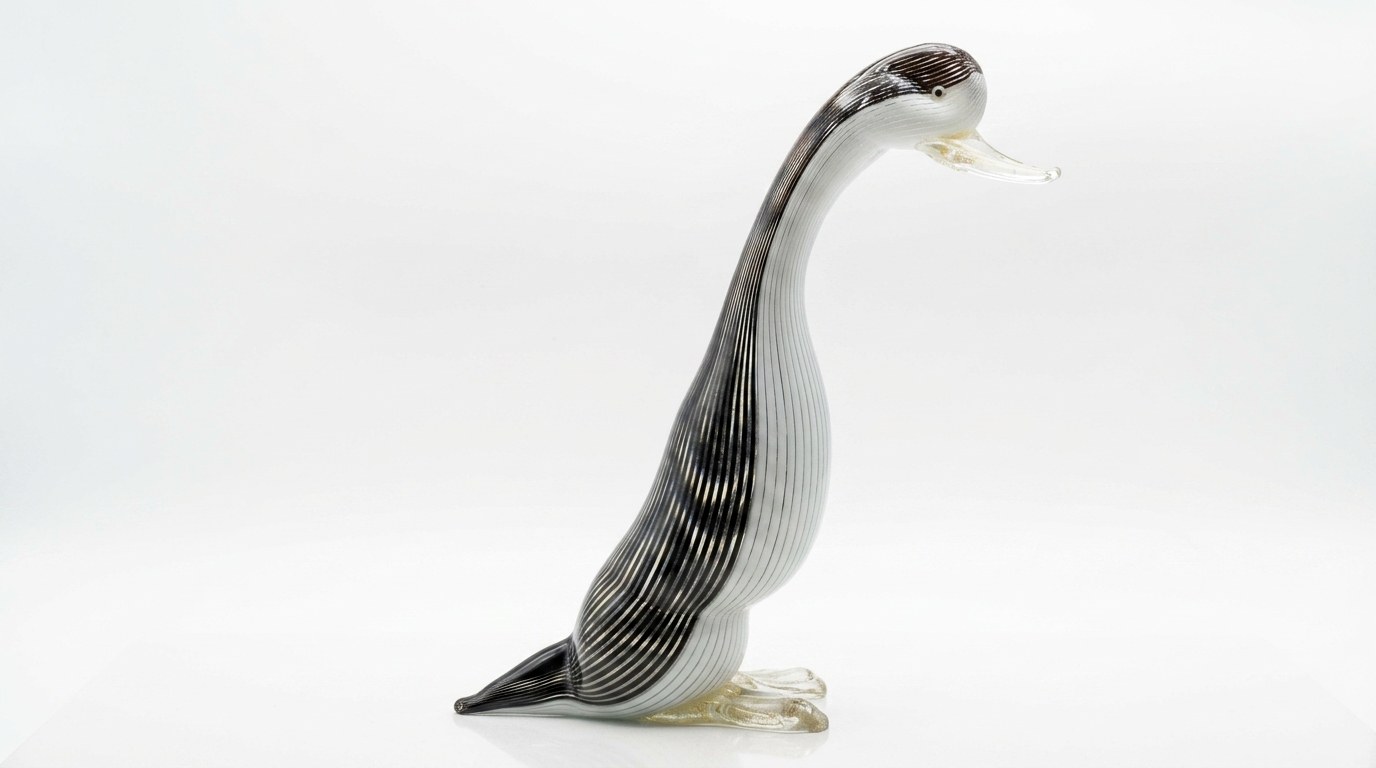
The Whimsical Biomorphism of a Murano Icon: Dino Martens’ Aureliano Toso Duck (Model No. 6911)
In the study of mid-century Murano glass, the transition from a designer’s initial two-dimensional drawing to the physical, hand-blown object is a process of extraordinary technical negotiation. While many designs from this golden era remain speculative or undocumented, the discovery of the original factory archives has allowed historians and collectors to connect physical masterpieces directly to their original blueprints.
A prime example of this direct lineage is Model No. 6911, a highly stylized, biomorphic duck designed by the painter Dino Martens for Vetri Decorativi Rag. Aureliano Toso in the late 1950s.
By analyzing the original factory design sketch alongside an authentic, surviving specimen, we can deconstruct the exact materials, hot-shop techniques, and forensic markers that define this iconic piece of Muranese modernism.
1. The Archival Blueprint (Model No. 6911)
The original factory drawing for Model No. 6911 provides an invaluable starting point for understanding Martens' design intentions:
                  [Model 6911 Archival Sketch Elements]

     Elongated, Arched Neck ------+
                                  |
    Slightly Curved Bill <--------+------> Symmetrical, Sloping Breast
                                  |
                                  +------> Sweeping Tail (Tripod Support)
- The Silhouette: The pencil sketch depicts a waterbird defined by an elongated, gracefully arched neck, a sloping breast, and a tail that sweeps downward to touch the ground. This sweeping tail was designed not just for aesthetic fluidity, but to serve as a structural tripod base when combined with the applied feet.
- Archival Markings: The design sheet features the model number "6911" handwritten in red pencil directly on the body of the bird, underscored by a red line, with the official printed designation "Model 6911" placed at the bottom left.
- Contour Lines: Rhythmic pencil lines wrap around the crown of the sketched bird's head. These served as a direct technical instruction for the maestro (master glassblower) on how to wrap the molten glass canes to define the plumage and anatomical contours.
2. Technical Execution: Mezza Filigrana & Applied Detailing
The physical specimen demonstrates how the hot-shop team translated Martens’ two-dimensional drawing into a three-dimensional sculpture using complex, traditional Muranese techniques.
The Mezza Filigrana Body
Rather than relying on the heavy sommerso (submerged) glass common in other mid-century animal sculptures, this duck is executed in a delicate mezza filigrana (half-filigree) technique.
- Cane Alignment: The body features parallel, vertical glass canes of alternating opaque white (lattimo) and dark purple-black glass. These canes run seamlessly from the tip of the tail, up the swelling breast, and terminate at the neck.
- The Head Cap: Exactly as indicated by the contour lines in the archival sketch, the canes wrap horizontally around the head, creating a darker, stylized "cap" that mimics the plumage of a wild duck.
Applied Hot-Glass Elements
- The Beak: Crafted from clear glass heavily infused with rich gold leaf (foglia d'oro), the bill curves upward in a playful, stylized smile, echoing the clean lines of the original sketch.
- The Eyes: The eyes are created from simple, dark, applied glass beads fused directly onto the hot parison of the head, providing a lively and expressive character.
3. Underbelly Forensics & Export Evidence
Examining the base and underbelly of the physical specimen reveals the crucial physical details that verify its authenticity and historical journey:
+--------------------------------------------------------------------------+
|                        UNDERBELLY ANATOMY                                |
+--------------------------------------------------------------------------+
|                                                                          |
|   [Cane Convergence]                                [Gold-Leaf Feet]     |
|   Mezza filigrana lines gather                      Webbed feet crafted  |
|   cleanly at the bottom core.                       with dense gold leaf.|
|                                                                          |
|                          [Export Label]                                  |
|                          Serrated paper sticker:                         |
|                          "Made in Italy"                                 |
+--------------------------------------------------------------------------+
- Cane Convergence: The underside of the duck's body shows how the parallel mezza filigrana canes converge cleanly at the base, demonstrating the meticulous alignment achieved by the master blower before the glass was expanded.
- Gold-Leaf Webbed Feet: The webbed feet are crafted from clear glass infused with dense gold leaf, matching the metallic composition of the bill and providing a stable, weighted foundation.
- The Historic Export Sticker: Affixed to the gold-flecked foot is a partially torn, oxidized, serrated paper label that reads "Made in Italy" in a simple typewriter-style serif font. This type of label was standard for pieces exported to the North American or Northern European markets during the late 1950s and early 1960s.
4. Collector's Summary & Identification Matrix
For appraisers and collectors, the alignment of a physical piece with its original archival design represents the highest tier of authentication.
+------------------+-------------------------------------------------------+
| Feature          | Technical Specification                               |
+------------------+-------------------------------------------------------+
| Model Number     | 6911 (Aureliano Toso Model Register)                  |
| Designer         | Dino Martens                                          |
| Primary Body     | Mezza Filigrana (Alternating white & dark canes)      |
| Base / Feet      | Webbed feet in clear glass with gold leaf/foil        |
| Tail Design      | Sweeping tripod tail (contacts ground)                |
| Eye Construction | Hand-applied dark glass bead                          |
| Labeling         | Vintage "Made in Italy" serrated paper export label   |
+------------------+-------------------------------------------------------+
The survival of the original model sheet, the precise physical replication of the design's proportions, and the presence of the mid-century export label make this duck an incredibly secure, museum-grade example of late-1950s Aureliano Toso craftsmanship.
If you are currently evaluating a mid-century Murano bird or animal sculpture, we can analyze its physical features—such as its cane work, applied details, and base finish—against the documented model register to verify its authenticity.
Join The Facebook Community Murano Glass Animals
Images Attribution: Rainer Bartl